The Feed Is Watching You Back
A few years ago, if you asked most e-commerce brands where sales happened, the answer was straightforward. Sales happened on the website. Everything else existed to support that moment. Ads pushed traffic. Social media created awareness. Email brought people back. But the sale itself lived in a place brands controlled and understood.
That assumption doesn’t really hold anymore. People still buy things online, obviously, but the way they get there looks very different now. It’s less intentional. Less planned. More accidental. Someone scrolls while waiting for coffee, half paying attention, sees a video, watches someone talk about a product like it’s not a big deal, and only later realizes they’ve spent money.
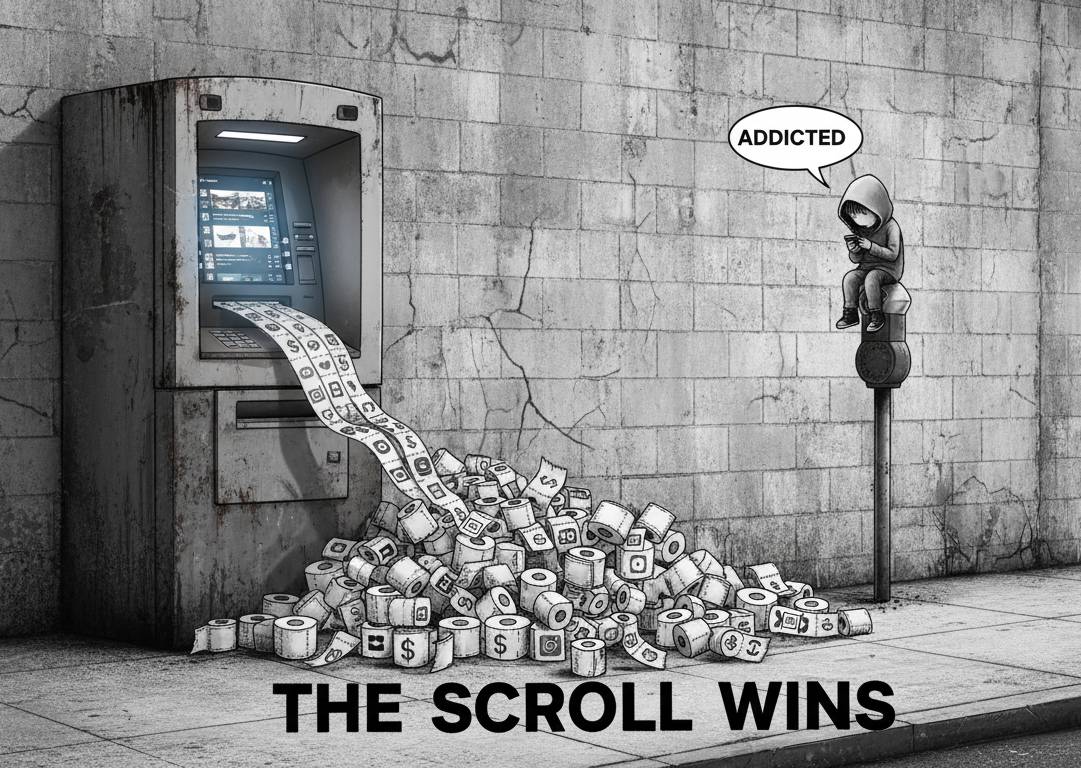
That’s not because people suddenly became reckless. It’s because the decision moved. What changed wasn’t attention spans or algorithms. What changed is where decisions happen. Short-form video pulled decision-making out of websites and dropped it directly into feeds. Checkout buttons came later. The behavior came first.
Buying used to feel like an action. Now it feels like a side effect.
Buying something used to feel deliberate. You had to decide to shop. You had to go somewhere specific, even if that place was just a browser tab. There was a mental shift that happened before the purchase.
Now, that shift often never happens. Most people don’t open social apps thinking, “Today I will buy something.” They open them because they’re bored, procrastinating, avoiding email, or killing time between tasks. Traditional e-commerce always fought against that reality. It tried to force intent where there wasn’t any.
Short-form video doesn’t force anything. It shows. It demonstrates. It lets people sit with an idea for a few seconds without asking for commitment. And when buying is optional instead of demanded, people relax. That’s when decisions slip through. This is why so much social commerce content doesn’t feel like selling. It feels like someone narrating their day, or sharing something they stumbled onto, or explaining why they switched from one thing to another. The transaction sits quietly in the background, waiting. Once you notice this shift, it’s hard to unsee how awkward traditional marketing feels by comparison.
TikTok Shop and the death of overthinking
TikTok didn’t invent impulse buying, but it did remove most of the friction that used to slow it down. TikTok Shop is blunt in a way that makes marketers uncomfortable and buyers strangely confident. Someone shows a product. They use it. They say why they like it. If you agree, you buy it. If you don’t, you scroll. There’s no ceremony around it. No build-up. No big reveal.
What’s interesting is how little polish matters here. In fact, too much polish often hurts. Videos that look rehearsed signal “ad” almost immediately. Videos that feel like someone figuring out what they’re saying as they say it tend to perform better. That hesitation reads as honesty. Brands struggle with this at first because it feels like losing control. You can’t fine-tune every word. You can’t guarantee the angle will match your brand deck. But TikTok isn’t rewarding brand alignment. It’s rewarding clarity. If a product needs heavy explanation, it usually struggles. If it makes sense quickly, it often flies. That can feel unfair, but it’s also very useful feedback. TikTok is unforgiving, but it’s honest.

Why creators matter more than creative
One of the reasons TikTok Shop works as well as it does is that people trust the person more than the presentation. The creator is the filter. Not the brand. When a creator talks about a product in the same tone they talk about everything else in their life, it lowers skepticism. You’re not evaluating a campaign anymore. You’re listening to someone explain something they use.
This is where many brands misfire. They look for the “perfect” creator instead of the right one. They over-brief. They script. They try to protect the message. And in doing so, they remove the very thing that made the content effective in the first place. The creators who sell best are often not the most polished. They’re the ones who sound like they’d say the same thing even if no one was paying them.
Instagram checkout and the comfort of repetition
Instagram works differently, mostly because people behave differently there. Instagram is slower. More familiar. Less chaotic. People follow accounts intentionally and stick around longer. That changes how buying happens.
On Instagram, purchases rarely come from a single moment. They come from repetition. A Reel here. A Story there. A reposted review. A casual mention that doesn’t feel staged. Over time, the product becomes familiar enough that buying feels safe. Instagram Checkout doesn’t force urgency. It just removes friction when someone is already ready.
This is why brands chasing instant conversions on Instagram often get frustrated. The platform rewards patience. It rewards staying visible without shouting. When a purchase happens, it feels less like an impulse and more like a quiet decision that’s been forming in the background. Instagram is not where people discover everything. It’s where people get comfortable with what they already know.
Stories, reels and the long middle of the funnel
What Instagram does particularly well is live in the middle. Not the first impression, not the final click, but everything in between. Reels introduce ideas. Stories resolve doubts. Stories are where objections get answered without being framed as objections. Shipping times. Fit. Texture. How it looks in real life. All the things that rarely fit into an ad but matter when money is involved. Brands that understand this stop treating Stories like filler. They use them to normalize the product. To show it casually. Repeatedly. In slightly different contexts. The sale doesn’t feel dramatic when it happens. It feels inevitable.
Pinterest is for people who are already halfway there
Pinterest doesn’t get talked about much in social commerce conversations, probably because it’s not flashy. But that’s exactly why it works.
People don’t open Pinterest to be entertained. They open it because they’re planning something. A purchase. A project. A future version of their life that they haven’t fully committed to yet. Short-form video on Pinterest doesn’t need hooks or drama. It needs clarity. Show how something works. Show where it fits. Show why it’s useful. That’s enough. The other difference is time. Pinterest content sticks around. A video can quietly do its job for months. That’s rare in social media, and incredibly valuable if you’re selling something that people think about before they buy. Pinterest proves that social commerce doesn’t always have to be fast. Sometimes it just has to be present.
When views stop being a useful signal
One of the more uncomfortable truths about short-form video is that popularity and effectiveness are often unrelated. A video can go viral and do absolutely nothing for revenue. Another video, barely noticed, can sell consistently for weeks. What converts isn’t excitement. It’s relevance.
Videos that sell tend to be specific. They talk to a particular person, not everyone. They answer real questions instead of trying to be clever. They show the product working in ordinary situations. This is frustrating for brands because the content that feels smartest internally is often not the content that performs best. The audience decides what matters, not the brand. Once you accept that, decision-making becomes much easier.

UGC isn’t about authenticity. It’s about believability.
User-generated content gets praised constantly, usually with words like “authentic” and “organic.” Those words aren’t wrong, but they’re vague. What actually matters is believability. People trust content when it feels like someone thinking out loud rather than delivering a message. They trust it when there are small imperfections. When the person talking sounds like a real person instead of a spokesperson. UGC answers the question buyers actually care about, which is not “Is this brand good?” but “What happens if someone like me buys this?” For brands, the mistake is treating UGC like decoration. It’s not something you add at the end. It often is the selling mechanism. The same creator video can support ads, checkout experiences, product pages
User-generated content gets praised constantly, usually with words like “authentic” and “organic.” Those words aren’t wrong, but they’re vague. What actually matters is believability.
People trust content when it feels like someone thinking out loud rather than delivering a message. They trust it when there are small imperfections. When the person talking sounds like a real person instead of a spokesperson.
UGC answers the question buyers actually care about, which is not “Is this brand good?” but “What happens if someone like me buys this?” For brands, the mistake is treating UGC like decoration. It’s not something you add at the end. It often is the selling mechanism. The same creator video can support ads, checkout experiences, product pages and in-app shopping flows. Over time, it becomes part of how the product is understood.
Social commerce isn’t easier than e-commerce, it’s just less formal
From the outside, social commerce looks effortless. A product blows up. Sales spike. Everyone asks how it happened. What they don’t see is the testing. The failures. The videos that didn’t work. The creators that didn’t convert. The posts that looked promising and did nothing. The brands that succeed here aren’t lucky. They’re attentive.
They pay attention to how people actually behave, not how marketing theory says they should behave. They let go of control where it doesn’t matter and focus on clarity where it does. Short-form video didn’t turn people into impulsive buyers. It just removed a lot of unnecessary steps. When buying becomes easy, people buy more.
That’s not a trick. It’s just human behavior playing out in a new place. And that place, whether brands like it or not, is the scroll.