Same Product, Different Price: You’ve Just Been Algorithm’d
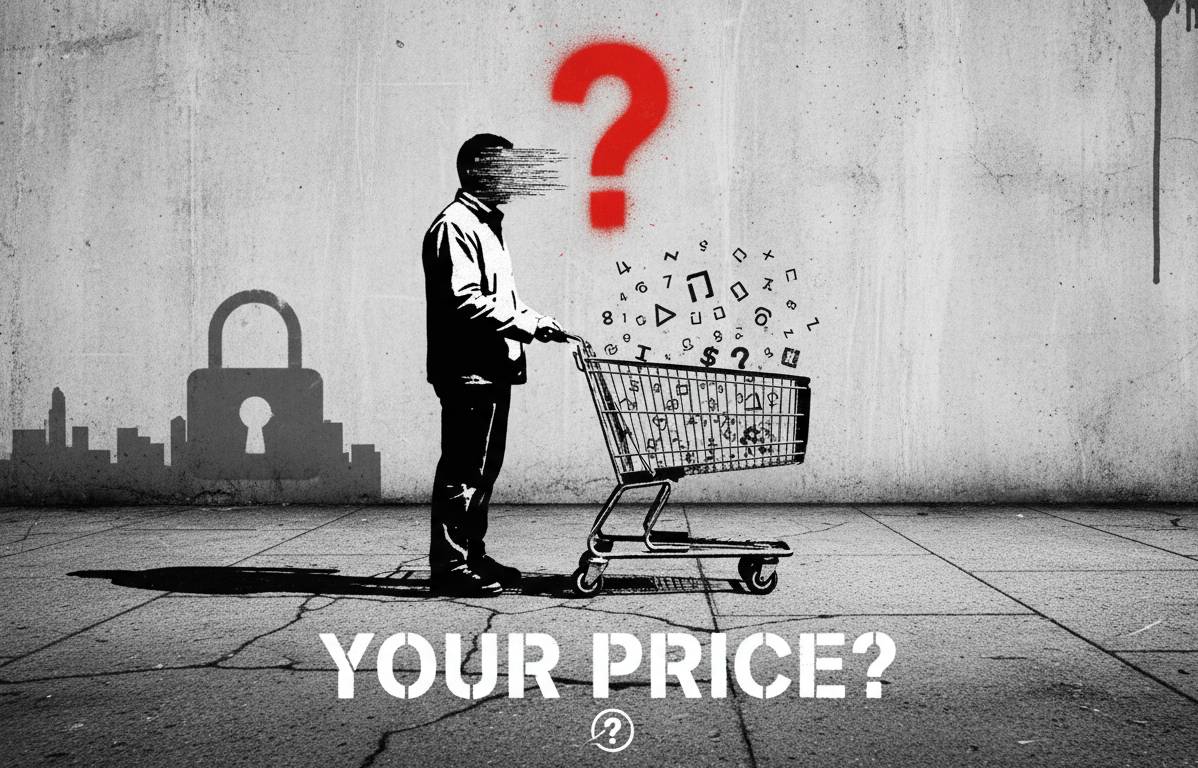
In this day and age, price labels are no longer permanent fixtures they are simply codes. The backpack for $49.99 you have added to your Amazon basket? Another person might have spotted it for $42. And you both would be unaware. This is how specialized pricing algorithms decide your price on the basis of your activity, place, device, and data profile. It is present as clever marketingadjusting prices to consumer demandbut there is a serious issue: digital discrimination. If two consumers receive different prices for the same product, not due to time or stock, but due to their identities or locations, it is not a room for tactics but a room for fairness.
This piece of writing delves into pricing algorithm usage by firms like Amazon, their threats to customers, and the shopping environment's moral ambiguity.
What Is Personalized Pricingand Why Should You Care?
Personalized pricing (first, degree price discrimination) refers to the technique whereby the prices are set individually to each customer based on their willingness to pay that is estimated. It has been a popular topic in economic theory for years. But now owing to big data and machine learning, it has become practicaland widespread...
Among the goals of personalized pricing are:
▪️Charging higher prices to those who can afford more thus maximizing profit
▪️Giving discounts to customers who are very sensitive to price
▪️Conducting micro experiments to test customer reactions
Even though airlines and ride, sharing services have made dynamic pricing a norm, personalized pricing is a step furtherit doesn't just adjust prices in accordance with consumer demand or time, but it personalizes the price for you basing on your data fingerprint.
Amazon's Early Pricing Misstep
Amazon tried to play with pricing in 2000 and it backfired. The company varied the prices of DVDs to different customers for the week. It didn't take long for many to notice and complain, including some regular customers who found upon checks that they had paid more than newcomers to the site first, time buyers. Amazon came out fast, blaming its apology on random testing, and refunded everyone.
In spite of the corporate assurance, the brand was tarnished. The consumers' anger was about paying more, surebut more importantly, the feeling of betrayal. Amazon, without their knowing, had broken that invisible line where personalization turns into exploitation. Since then the business has shied away from customer, specific pricing in their statements. It is not through the lens of what is said that people interpret the millions of price changes daily; is it the dynamic or personal? How Do Companies Decide What Youll Pay? Personalized pricing is all about dataloads of it. The more a site has on you, the classier it can be with your price sensitivity modeling.
What it might take into account:
Device type: There have been cases where Mac users were offered higher hotel room rates as compared to PC users.
Location: Based on studies consumers in affluent or less competitive areas usually get higher prices.
Shopping habits: The logic goes, if youre a frequent Prime buyer you may be up to a price hike, whereas a deal, hunter would be the one getting a discount.
Referral path: Showing up from a price comparison site can result in a reduced price.
Retailers are not necessarily interested in knowing your income, age, or gender. Instead, they guess the probable behavior through proxiesand that's when it becomes more complicated.
Case Study: Staples and ZIP Code Discrimination
Four years ago The Wall Street Journal uncovered through investigation that Staples e, store had been using the visitors ZIP code to display different prices. The rationale behind the approach was the presence of a competitor for the office supplies in the vicinity of the customer. When there was a competitor, the prices were lower. When there was no competitor, prices remained high. So, the people in the low, income areas with less competition tended to get the worst at the highest prices. Even though Staples defended the move by saying it was adjusting prices according to the level of competition in the market, the effect was that the lower, income consumers paid more. It is an example of the algorithmic logic indirectly generating a discriminatory outcome.

The Opaque World of Pricing Algorithms
Just like discount coupons or points collected at loyalty programs, personalized pricing is not usually explained clearly. The majority of the time, the platforms neither inform the customers of the price changes nor the reasons behind them. This is partially a strategy since the consumers strongly dislike the idea that their identities determine them being charged more.
The European Community, through its regulations, has required retailers to announce if prices are personalized based solely on the automated decision, making process. To contrast, there is no voice in U.S. legislation which, in turn, leaves businesses the greater part of the liberty to change prices with very limited disclosure. As a consequence, the majority of personalized pricing is floating in a black boxunseen and unaccountable.
When Personalization Crosses the Line
If nothing else, personalized pricing is a tool for better allocating resources. At its worst, it may be digital redlining where people are charged more based on certain characteristics that have been inferred but which they never consented to share.
Here are some such examples:
Device discrimination: Orbitz had, at some point, decided to display more expensive hotels for Mac users.
Location pricing: In 2019, the Target app revealed different prices to those users who were inside the store while users browsing from their homes saw lower prices.
Behavioral profiling: "Loyal" customers who never compare prices may be flagged by algorithms as a prime source for higher prices.
These are not just anomalies, each represents an algorithm secretly profiling you and changing prices depending on that. And due to the lack of transparency, there is hardly any means of redress.
Instacarts Algorithmic Experimentation
Nonprofit technologists publishing a research paper in 2025 brought to light that the grocery delivery company, Instacart, was engaged in algorithmic pricing tests. One bottle of shampoo, for example, was priced differently to a variety of users within the same geographic area on the same day. Some customers paid even 23% more, but the increase was not explained by either demand or stock level but rather by the treatment group to which they were assigned. In its defense, Instacart stated that the trials were randomized and that no personal data were used. Nevertheless, the fact that essential goods are subjected to pricing tests without user consent is quite shocking.
The company terminated the program following the negative reaction. However, the episode demonstrated how easily AI could be harnessed to inch prices upespecially when the user is totally unaware of the situation.
Fairness, Trust, and the Psychological FalloutThe rationality of price optimization is what economists see but consumers dont
Findings indicated that individuals who discover they have been charged extra compared to others feel cheated regardless of how insignificant the amount actually is. The pricing is not merely a financial transaction, but an emotional one. A behavioral experiment showed that participants are willing to pay more if the pricing is transparent than when it is kept secret or is inconsistent. It was not the price that was the critical variable, it was the fairness perception.
In online business, where trust is the equivalent of money, perceived unfairness is the poison. As a matter of fact, disgruntled consumers may indeed cease buying, write negative reviews, or completely switch to other platforms. To make matters worse, even the suspicion of personalized pricing can harm a brand.
Is This Legal?
In the majority of the cases, it is so but the question of legality is evolving. In most cases, it is permissible in the U.S. that retail price discrimination occurs, if it does not go against anti, discrimination laws (e.g., race or gender), or if it is not false advertising. However, regulators could get involved if an algorithm charges more, for instance, to certain ZIP codes based on demographics, and the resulting discrimination is indirect. The Federal Trade Commission has started hearing what it calls surveillance pricing and there are demands for more transparency. Some legislators are of the opinion that the use of personal data to increase prices, especially in the case of emergencies or essential goods, could amount to unfair or deceptive practice.

Why Businesses Risk It Anyway
For ecommerce companies, the temptation of personalized pricing is huge:
▪️It can raise the margin without the need to change the product
▪️It facilitates real, time A/B testing of thousands of users
▪️Most consumers don't pay attention or they don't have the evidence to prove it
Some platforms disguise the tactic by calling it dynamic pricing or real, time optimization. Whether the strategy is successful in the short term, it changes certain things. One of them is consumer trust, which comes at a price.
The Ethical Dilemma
The ethics of personalized pricing can be summarized in one simple question: If you can do something, should you always do it?" Is it reasonable to charge a higher price to a person who does not come through a coupon site? Or why a resident of a "less price, sensitive" ZIP code should pay extra?
Proponents of personalization agree on certain safeguards which they consider universal:
▪️Price transparency: Inform consumers when personalization is in use
▪️Baseline fairness: Do not use personal data to raise prices
▪️Opt, in consent: Personalization should be a users benefit, not a means of exploitation
Some of them even suggest the price of essential goods should be uniform regardless of the consumer. Just as it is impossible to give different water rates based on behavior, utilities are not allowed to do this.
What Can Consumers Do?
Consumers are unlikely to outsmart algorithms, but can take some actions to protect themselves:
▪️Use incognito mode when browsing or booking
▪️Compare prices, using different devices or browsers
▪️Try different ZIP codes and get delivery quotes
▪️Track prices with tools like CamelCamelCamel or Honey
▪️Keep cleaning cookies or don't log in until checkout
All these hacks are not perfect, but they may be helpful in figuring out if the prices change depending on who you are.
Where Do We Go from Here?
Unfortunately, the practice of personalized pricing will not be phased out. In fact, it is expected to become ubiquitous, powered by more data, smarter AI, and corporate pressure to maximize revenue.
Our frameworks, however, have to evolve with the technology:
▪️Consumers deserve transparency, not just legal fine print.
▪️These platforms require accountability, particularly when they hide unjustified price differences.
▪️Regulators need tools to audit algorithms and prevent digital discrimination.
Backlashes to platforms that went over the line have become common events. For instance, Amazon's DVD fiasco or Instacart's AI grocery tests. These incidents should not be considered as outliers. They signal that the warning lights are on in the market.
Conclusion: A Marketplace Built on Trustor Tricks?
Ecommerce is, without a doubt, a powerful tool for empowerment. It gives consumers more choices, better access, and greater convenience than ever before. However, when pricing is determined by invisible algorithms that exploit silent data trails, the promise is not satisfied. Personalized pricing, by its very nature, is a force which disempowers consumers. It gives an advantage to the clever and a disadvantage to the ignorant. It also creates hidden inequalities that are extremely difficult to identify, even harder to prove, and almost impossible to challenge. The fate of online commerce lies in the hands of whether the platforms will choose transparency over manipulation, and fairness over frictionless profit. Till then, one can take it as a rule of thumb: if the price doesn't feel right, it probably isn't.