Cheap Traffic Is Dead - We All Helped Kill It
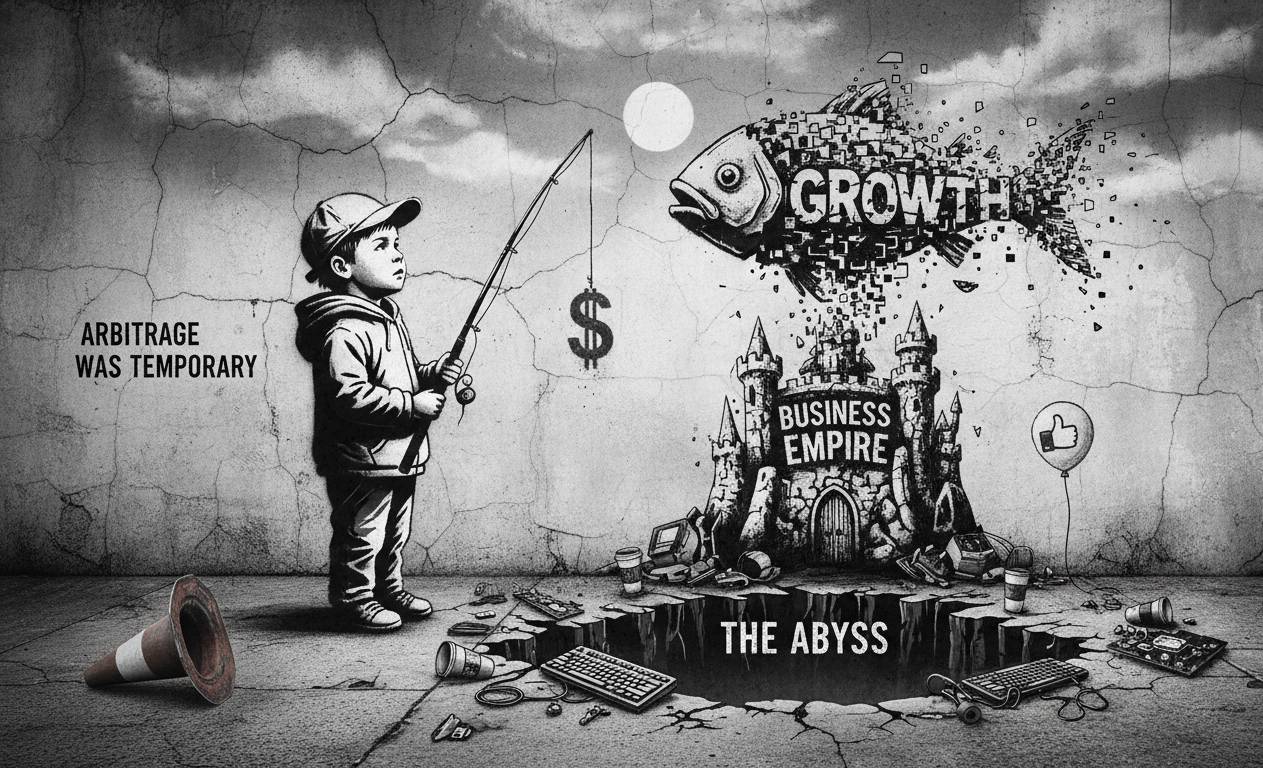
For a long time, growing an internet business felt almost unfair. You could have a decent product, an okay website and a few ads that didn’t embarrass you - and suddenly you were in business. Turn on Facebook. Add Google. Watch the numbers move. As long as your cost to acquire a customer stayed below what that customer was worth everything else felt solvable later.
Many companies never got past that “later” stage. They didn’t have to. That’s why the current moment feels so unsettling. It’s not just that ads are more expensive. It’s that the entire mental model behind paid growth no longer works the way it used to. What once felt predictable now feels slippery. What once scaled cleanly now breaks under pressure. Cheap traffic didn’t just get more expensive. It stopped behaving.
When Paid Ads Were the Business Model
In hindsight it’s strange how normal it became to treat paid traffic as the foundation of a company. There was a stretch of time - especially in the 2010s - when this made perfect sense. Platforms were growing fast. Targeting kept getting better. Data flowed freely across the web. Competition existed but it hadn’t yet turned every auction into a knife fight.
If you understood funnels, creative and bidding even slightly better than average you could win. And “winning” didn’t mean marginal gains. It meant doubling, tripling or scaling tenfold in a short period of time. That environment shaped how people built companies. Distribution came last. Brand was something you worried about once you hit scale. Retention mattered but mostly because it improved your ability to spend more on acquisition.
Paid media wasn’t just a channel. It was the strategy. When ads worked this well it quietly changed how risk was perceived. You didn’t need to be right about everything. You just needed to be right enough, fast enough and funded enough. Mistakes could be papered over with spend. Weak positioning could be compensated for with targeting. Mediocre products could survive on novelty and reach. The system rewarded speed more than substance.

Arbitrage Was Always Temporary
The uncomfortable truth is that cheap traffic was never sustainable. It existed because the system was inefficient. Platforms didn’t fully understand pricing. Advertisers didn’t fully understand audiences. The market hadn’t converged yet. Once everyone learned the same playbooks, the same lessons, the same tactics, the imbalance disappeared. More advertisers chased the same attention. More money flowed into the same auctions. Platforms got better at extracting value.
This is what mature markets do. They squeeze out excess returns. It happens in finance. It happens in real estate. It happens in retail. Anywhere money piles into a single strategy long enough the margins collapse. What made digital advertising feel different was how fast it happened and how many businesses were built assuming it would last forever. Growth decks, hiring plans and valuations were all anchored to a version of reality that no longer exists. When arbitrage disappears it doesn’t announce itself. It just stops forgiving mistakes.
Rising CAC isn’t the real shock
People talk about rising customer acquisition costs as if they’re the core issue. They aren’t. Higher CAC is just the most visible sign that the underlying economics have changed. The deeper issue is that paid ads no longer create demand the way they once appeared to.
In the early days, ads felt magical. You could introduce people to products they didn’t know existed and convert them immediately. Over time, that shifted. Ads became better at capturing existing intent than generating new interest. That works fine when you’re one of a few advertisers doing it. It works much less well when everyone is. As competition increased, the cost of intercepting demand rose. The demand itself didn’t vanish. The margin did.
This is why so many brands today report the same experience: campaigns that technically “work” but don’t move the business forward in a meaningful way. Revenue comes in but profit doesn’t follow. Spend scales but confidence doesn’t. You’re not failing. You’re just paying market price now.
The attribution illusion cracks
At the same time costs were rising, something else quietly fell apart: confidence. For years attribution acted as a psychological anchor. Even when ads were expensive dashboards told a coherent story. You could point to numbers and say: “This is working.” Now those numbers feel fuzzier.
Tracking is fragmented. Conversions are modeled. Results vary depending on the window, the platform or the report you trust. Marketers still optimize but often toward metrics that feel increasingly detached from real business outcomes. This creates a strange tension. Companies keep spending but with less conviction. Decisions are made because they have to be made not because the data feels solid.
And when belief erodes behavior changes. Teams become conservative. Experiments shrink. Everyone waits for clarity that never really comes. The danger isn’t that attribution is imperfect. It always was. The danger is pretending it isn’t and building strategies on numbers that feel precise but aren’t dependable.
Paid media starts feeling like rent
There’s a moment many founders eventually hit. They’re spending more than ever but growth feels fragile. Turn ads down and revenue drops. Turn them up and margins disappear. At that point paid media stops feeling like leverage and starts feeling like rent. You’re not investing in growth anymore. You’re paying to exist.
This is where the relationship between platforms and advertisers quietly changes. Platforms still win - revenue continues to flow - but advertisers carry more risk. Efficiency becomes secondary to participation. You don’t run ads because they’re amazing. You run them because visibility has a price and the alternative feels worse. This is a hard realization, especially for teams built around performance marketing. It forces an uncomfortable question: if ads disappeared tomorrow, what would still be left?
Why some businesses break faster than others
Not every company is affected the same way. Businesses that relied almost entirely on paid acquisition feel the pain first. If your growth only works when traffic is cheap any increase in cost hits directly. There’s no buffer.
On the other hand, companies with strong repeat behavior, organic demand, or brand recognition absorb the shock more easily. They still feel rising costs, but they aren’t defined by them. These companies don’t panic as quickly because they aren’t exposed in the same way. They have customers who come back without being reminded. They have word-of-mouth that doesn’t show up neatly in dashboards. They have demand that exists before the ad impression. This is the part that’s easy to miss: paid ads didn’t suddenly stop working. They stopped carrying weak fundamentals.

What actually changes when cheap traffic is gone
When the shortcut disappears priorities shift whether you like it or not. Demand creation starts to matter more than demand capture. Being known becomes as important as being clickable. The question moves from “How do we convert better?” to “Why would someone care in the first place?” Retention becomes central. When new customers are expensive keeping existing ones isn’t just good practice - it’s survival. Businesses that churn customers quickly feel like they’re constantly refilling a leaking bucket.
Paid media takes on a different role. Instead of being the engine, it becomes the amplifier. It works best when it reinforces something that already exists rather than trying to invent demand from scratch. Measurement becomes humbler. Instead of chasing perfect attribution, teams look for directional truth. They pay more attention to cash flow, cohorts, and long-term behavior than weekly ROAS swings. And slowly, sometimes reluctantly, brands start acting like media companies. They create content. They build audiences. They invest in channels they actually own.
Not because it’s trendy but because the math forces them to.
Why does this feel harder than it “should”
A lot of frustration around this shift comes from misplaced expectations. People didn’t just lose efficiency. They lost certainty. Paid growth used to feel controllable. You could turn knobs and see results. Brand, product and organic growth are messier. They require patience. They don’t reward optimization in neat increments. There's also an emotional component. Many careers were built mastering a system that no longer behaves the same way. That’s destabilizing. It makes experience feel less transferable and expertise feels less permanent. But discomfort doesn’t mean regression. It usually means the system is becoming more realistic.
Growth didn’t die, the shortcut did
It’s tempting to frame this moment as decline. It isn’t. What’s dying is the idea that you can buy your way out of weak differentiation, forgettable products or shallow relationships with customers.
Growth still exists. It just looks different now. It looks slower at first. More uneven. Less spreadsheet-friendly. It rewards consistency over cleverness and patience over pressure. But it’s also more durable. Less fragile. Less dependent on external systems you don’t control.
The businesses that will win next
The companies that come out stronger on the other side of this shift share a few traits even if they don’t talk about them explicitly. They’re clear about who they’re for and why they matter. They don’t rely on targeting alone to explain themselves. They build things people come back to not just things that convert once. They use paid ads intentionally, not desperately. And they accept that not everything important can be perfectly measured. These aren’t revolutionary ideas. They just weren’t mandatory when traffic was cheap. Now they are.
The real lesson of cheap traffic
Cheap traffic didn’t disappear because of one update, one regulation or one bad year. It disappeared because it was never meant to last. It was a temporary imbalance that an entire generation of companies treated as permanent infrastructure. What replaces it isn’t broken. It’s simply less forgiving.
And for businesses willing to build something people actually want that’s not a loss. It’s a reset.