You Built a Brand. Amazon Built the Customer.
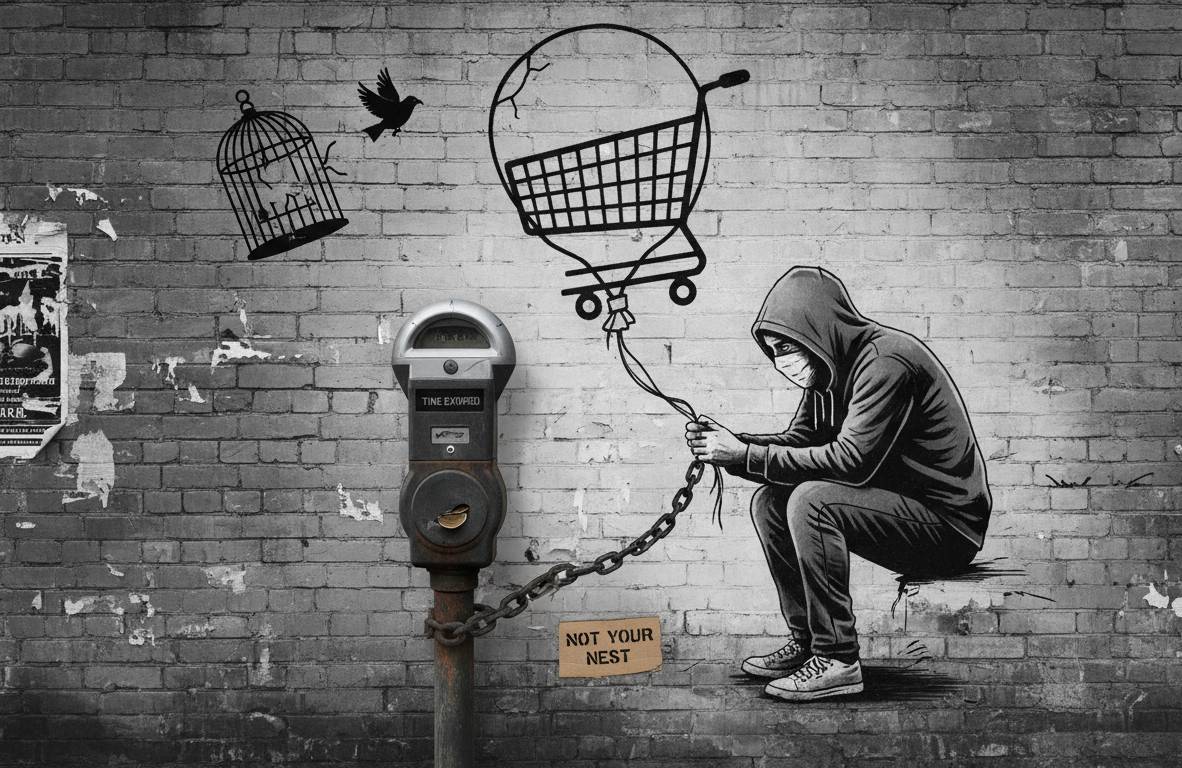
I don’t think most founders wake up one day and decide to give their brand away. It doesn’t happen in one dramatic moment. There's no clear fork in the road where you knowingly choose dependence over independence. It happens slowly. Quietly. Almost politely. You start selling on a marketplace because it makes sense. There's traffic. There’s trust. There's momentum already baked in. You tell yourself it’s just another channel. One more distribution outlet. Nothing wrong with being where customers already are.
At first it feels like relief. Maybe even validation. Finally sales without pleading for attention. Finally proof that the product works. Finally numbers that move without you having to explain yourself to anyone. You stop worrying so much about story. About tone. About whether people understand what you’re trying to build. The marketplace handles that part. You focus on operations, logistics, optimization. Serious work. Adult work.
And then one day, without a clean moment where it happens, you realize something uncomfortable. Your brand doesn’t really exist anymore. At least not in the way you thought it did.
It starts with convenience, not greed
Marketplaces don’t trap you. They make life easier. That’s why this works so well. You don’t need to convince customers you’re legitimate. You don’t need to build infrastructure from scratch. You don’t need to fight for attention in feeds that feel crowded and unpredictable. People are already there, already shopping, already in a buying mindset.
If you’ve ever tried to create demand from nothing, you know how brutal that phase is. The silence. The doubt. The sense that you’re shouting into the void. Marketplaces remove that pain. So when founders lean in it’s not because they’re lazy or shortsighted. It’s because the alternative feels exhausting. Abstract. Risky.
The mistake isn’t using convenience. The mistake is mistaking convenience for progress.
Selling and building look the same at first
Early on selling and building are almost indistinguishable. Money comes in either way. Orders ship. Customers leave reviews. Revenue graphs rise. From the outside everything looks healthy.
But underneath something different is happening. Selling is transactional. It resets after every purchase. Building is cumulative. It compounds. A brand grows when each interaction makes the next one easier. When trust carries forward. When recognition reduces friction. When people come back without being prompted.
Marketplaces interrupt that compounding. They don’t allow memory to form. They don’t encourage loyalty to flow sideways. Everything points back to the platform itself. You might be growing sales but you’re not growing gravity.

The customer isn’t thinking about you
This part hurts especially if you care deeply about what you’re making. But most customers don’t experience your brand the way you do. They didn’t read your origin story. They didn’t absorb your positioning. They didn’t choose you because of your values or your long-term vision. They chose you because you were visible, available, and good enough.
That’s not an insult. That’s how people shop in environments designed for speed and convenience.
Be honest with yourself. When you buy something on a marketplace are you loyal to the brand or to the experience? Do you remember who you bought from last time, or do you just search again and choose whatever looks right today?
The platform trains this behavior. Fast decisions. Minimal attachment. Easy substitution. Every sale reinforces the habit.
Demand that isn’t yours can disappear overnight
One of the most dangerous things about marketplace dependence is how stable it feels. Revenue becomes predictable. Conversion rates settle into a rhythm. You can forecast. You can plan. You can breathe. It feels solid.
Until something small changes. A ranking slips. A policy update lands. A competitor copies your listing and undercuts you. Ads cost more this month than last. Reviews slow down. Nothing dramatic. Nothing you can screenshot and say, “This is when it broke.”
But suddenly you’re working harder to stay where you are. Watching numbers more closely. Stress-testing scenarios you didn’t think you’d need. That’s when you realize how little of this belongs to you. When demand is borrowed stability is conditional.
The squeeze doesn’t announce itself
Margin compression almost never arrives as a shock. It creeps. A new fee here. A higher ad bid there. Storage costs you didn’t think about. More returns than before. A discount you run just to keep velocity up. Each change is survivable. Even logical.
So you adapt. You optimize. You tell yourself this is just what scale looks like. But over time the character of the business changes. You sell more and keep less. You work more and feel poorer. You grow revenue while profit stalls.
You’re not failing. You’re just paying the long-term cost of dependency.
Advertising becomes defensive without you noticing
There’s a moment - and it’s rarely obvious - when advertising stops feeling like a tool and starts feeling like oxygen. You don’t notice it the first time. You just know that when you pull back spend things get worse. Visibility drops. Sales follow. Someone else fills the space. You’re not advertising to create demand anymore. You’re advertising to protect access to demand that already exists.
That changes your mindset. You become reactive. Protective. Less creative. You start thinking in terms of risk avoidance instead of opportunity. And slowly the idea of leaving the platform starts to feel impossible - not because your brand couldn’t survive elsewhere but because you’ve forgotten how to generate demand without being handed it.
The algorithm is not your partner
Founders often believe that effort should matter. That quality should matter. That originality should matter. That intention should matter.
Algorithms don’t share that belief. They optimize for what’s easy to measure and easy to scale. Conversion speed. Price competitiveness. Reliability. Spend. If what makes your product special doesn’t translate cleanly into those signals, it effectively doesn’t exist. This is why copycats thrive. Why everything starts to look the same. Why pricing pressure never really disappears. It’s not because customers don’t care. It’s because the system filters choice long before customers ever get to choose.
You’re making decisions with incomplete information
Another thing founders don’t like to say out loud: you’re operating with partial visibility. You see revenue. Units sold. Some surface-level analytics.
The platform sees behavior. Intent. Patterns across millions of interactions. That difference shapes everything. It means decisions are being made upstream of you. Rules change based on data you never see. Opportunities appear and disappear without explanation. Even if no one is acting maliciously power accumulates where information accumulates.
And it doesn’t accumulate with you.
Why founders stay longer than they should
If all of this is true, why don’t more brands leave earlier? Because leaving feels irresponsible. Marketplaces feel known. Even when they’re frustrating they’re familiar. You know the rules. You know the levers. You know roughly what happens if you spend X and tweak Y.
Building outside that system feels vague by comparison. Emotional. Hard to measure. Hard to justify. There’s no immediate dopamine hit. No clean dashboard telling you you’re right. It feels like stepping backward.
So founders delay. They say they’ll diversify later. When revenue is higher. When things feel more stable. But things never feel stable enough to give up certainty voluntarily.

The opportunity cost is invisible
The biggest loss isn’t margin or control. It’s what you never build while you’re busy optimizing someone else’s system. You don’t build a direct relationship with customers. You don’t build memory. You don’t build a reason for people to seek you out intentionally.
Those things compound quietly. Slowly. Almost invisibly. And when you don’t invest in them early you can’t rush them later. Brands that survive shocks aren’t the ones with the best listings. They’re the ones people remember when convenience disappears.
This isn’t a call to reject marketplaces
Marketplaces are useful. Sometimes incredibly so. They can introduce you to customers you would never reach otherwise. They can support volume. They can stabilize cash flow. The mistake is letting them define you. They work best as a layer not a foundation. As a way to meet customers, not the only place you exist. That requires patience. And confidence. And a tolerance for discomfort while you build something slower but sturdier.
Not everyone wants that path. But you should choose consciously not drift into it.
The question that actually matters
If the marketplace disappeared tomorrow what would remain? Would anyone search for you? Would anyone notice you were gone? Would you still know how to reach the people who once bought from you?
If that question makes you uneasy, that’s not failure. That’s awareness. And awareness still gives you options.
The ending no one likes hearing
Marketplaces don’t need to destroy your brand. They just need to make it unnecessary. They do that by being better at distribution than you. By owning the relationship. By setting the rules. By letting you grow just enough to depend on them.
They’ll keep doing it, because it works. The only real choice is whether you build something that exists outside their walls - something people recognize, remember and return to on purpose.
Because growth you don’t control isn’t freedom.
It’s just comfort with an expiration date.