We Fixed Waiting. You’re Welcome.
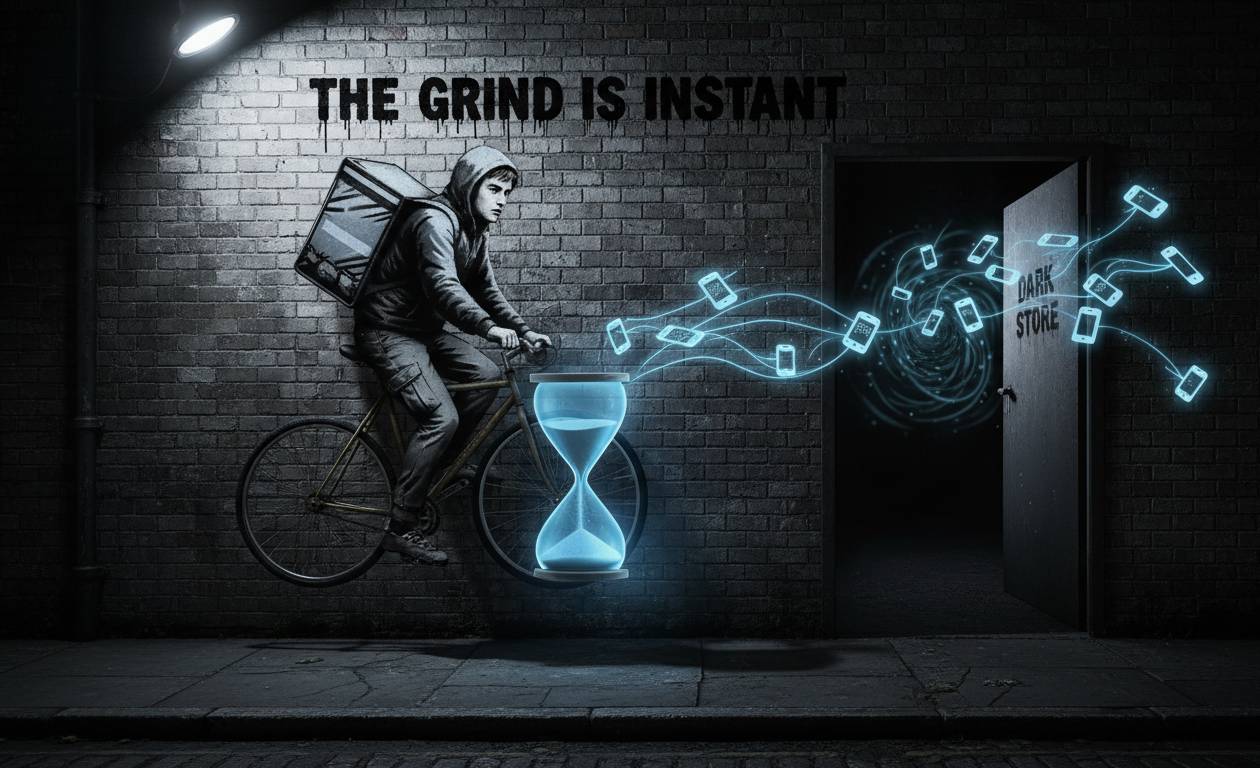
Imagine ordering groceries or medicine on your phone – and having them on your doorstep in 10 minutes or less. It might sound futuristic but this is the promise of quick commerce, the latest trend quietly shaking up retail. In cities around the world startups like Gopuff, Getir and Blinkit have built networks of mini-warehouses (called “dark stores”) so compact and close to customers that couriers on bikes can dash out deliveries in the blink of an eye. They’re banking on one big shift: today’s shoppers, especially busy urban millennials, will pay for convenience.
The rise of instant needs
During the COVID-19 pandemic many people tried grocery delivery for the first time and they hated waiting days. Even after lockdowns ended habits changed. A 2024 survey found 65% of European city-dwellers expect 30-minute deliveries and nearly half would pay extra to shave their wait to 15 minutes. In the U.S. over a third of online shoppers already pay a fee to get their orders in under an hour. This craving for speed isn’t just about laziness – it’s about fitting retail into busy lives. Forgot the milk on your way home? Why make a second trip to the store if an app can handle it?
Small orders, big logistics
But making “instant delivery” happen is no small feat. Quick-commerce companies set up dark stores stocked with just the hottest essentials. Instead of one giant warehouse outside town they have dozens or hundreds of tiny hubs sprinkled through the city. For example, Getir (Turkey) and Blinkit (India) each have thousands of these stores packed with groceries, snacks and toiletries. When you click “order” an algorithm picks the nearest store that has what you need. A store employee grabs your items and a courier on a bike zips the order to you – often in 10–20 minutes.
By contrast traditional online retail works differently. Companies like Amazon or Walmart mostly ship from large warehouses. They combine your order with others in trucks which may travel hours across regions. That model supports a vast range of products and big orders but it typically means delivery in days, not minutes. Quick commerce flips that: it’s about sacrificing variety and scale for speed. Expect a smaller menu (can you really get a TV by bike in 15 minutes?) but unprecedented convenience for everyday needs.

Tech under the hood
How do they make it all work? The secret sauce is technology. Smart systems predict what people will buy at every hour then auto-stock the right items in each dark store. (One urban logistics platform claims its AI predicts demand with 90% accuracy.) Route-planning software considers traffic and weather in real time shaving off precious minutes. Some hubs even use robots to pick groceries. In a Frankfurt dark store conveyor belts and scanners help pack hundreds of orders per hour. And every package is tracked with GPS so you can watch the delivery on a map. All this digital wizardry means what used to take weeks in supply chain time happens in a few hours or minutes.
Cost vs. convenience
Of course, this speed comes at a price. Serving one customer in 30 minutes costs a lot more than bundling many orders over a few days. Quick-commerce orders are small – maybe a few items for $5–$20 – but the delivery cost can be a few dollars each. Analysts say each speedy delivery could cost €2–3 in labor and fuel. For perspective Walmart can deliver $100 worth of goods in a box for a similar price but it does so more slowly and spreads the cost over many items.
Startups often absorb this cost early on funded by investors who hope to win big market share. But raising prices for customers has limits; these services usually charge a flat fee plus a subscription option. For example, in the U.S., GoPuff delivers anything in minutes for a flat $1.95 fee (plus you can subscribe for free delivery). Blinkit in India sells a membership plan for unlimited 15-min deliveries. In general quick delivery often comes at a premium – you pay for speed.
Impact on cities and society
The ultra-fast model has downsides too. Imagine dozens of couriers racing down city streets with lunchboxes of groceries. Some city councils worry about noise, congestion and pollution. Amsterdam and Rotterdam temporarily banned new dark stores after residents complained of late-night scooter traffic. More delivery vehicles on the road also means more emissions unless they’re electric. Quick deliveries also generate more packaging waste (tiny paper bags and plastic liners for each order).
Labor is another issue. Many couriers are gig workers who may earn less than $2,000 a month after expenses. There have been protests – in China food delivery drivers even went on strike over pay cuts imposed by app algorithms. Regulations are catching up: Europe is considering rules to give gig workers more rights (minimum pay, social benefits) which could raise costs. Smart companies are trying greener options like e-bikes and smarter route batching, but balancing speed with sustainability is a real challenge.
How traditional retailers are reacting
Legacy retailers aren’t standing still. Realizing they can’t ignore the instant craze they’re rolling out faster options: same-day or 2-hour delivery in urban zones, in-store pickup within an hour and partnerships with delivery apps. Walmart, for instance, now covers 95% of U.S. households with a 3-hour delivery guarantee leveraging its 4,700 stores as mini-warehouses. Amazon revived “instant delivery” in 2025 by testing a 30-minute service in two U.S. cities – a sign that even the e-commerce giant feels the pressure.
Many supermarkets use their existing stores to fulfill online orders quickly. “Buy online, pick up in store” (BOPIS) and curbside pickup exploded in popularity. It’s not instant but customers often get their order within a few hours of clicking. Plus, by using store staff, the retailer doesn’t need a separate network of hubs. For wider reach grocers plug into platforms like Instacart or Gopuff to get into the quick-delivery game without building it themselves.

Case in point – successes and failures
The quick-commerce space has seen splashy launches and hard lessons. On the success side consider Blinkit (India): founded 2013 as a slower grocery app it rebranded in 2020 for instant delivery and was acquired by Zomato in 2021. Blinkit now has nearly half of India’s Q-commerce orders often promising deliveries in 10 minutes. Getir (Turkey) and its European merger partner Gorillas (Germany) both scaled to tens of millions in funding each promising 10-minute service with huge networks of hubs.
But not all have thrived. Gorillas itself shuttered its U.S. arm and later sold to Getir citing losses. Swiggy (India) paused its Instamart quick deliveries outside core cities when costs were too high. Even Gopuff, the fast-delivery behemoth in the U.S., had its valuation halved (from $15B to $8.5B) between 2021 and 2025 as investor enthusiasm cooled. Quick commerce seems poised for consolidation: only those who master the economics (or are funded enough to ride out the losses) will survive.
Looking ahead – what to watch:
- Wider adoption in cities: In big metros expect more neighborhoods to get quick-delivery options. It won’t be everywhere – my small town probably won’t see 15-min delivery soon – but anywhere with hundreds of thousands of people likely will.
- Technology pushes: Advances like delivery drones or sidewalk robots could someday join bikes in bringing packages. Already companies are experimenting with bigger, more automated micro-warehouses to cut costs.
- Customer expectations: Once customers taste instant delivery they start judging normal e-commerce by those standards. This could lead Amazon and others to speed up everything gradually. For example, “next-day” Amazon Prime might feel slow if people are used to instant snacks.
- Strategic shifts: If you’re a retailer investing a little in faster delivery might be strategic. Even if full 10-min service isn’t viable for all product, having some “express” service could lock in busy customers. Think of it as an insurance policy: meeting that bleeding-edge expectation prevents losing customers to startups.
Actionable takeaways:
- Pilot and learn. Don’t overhaul your entire supply chain overnight. Try quick-delivery pilots in your biggest city with a limited product set. See how many orders you actually get and at what cost.
- Use your stores. Turn some retail locations into mini-fulfillment hubs during off-hours. Many grocers already pack online orders from store shelves in evenings – this can be optimized for speed.
- Partner smartly. If building a dark store network is too heavy team up with existing Q-commerce apps. You provide the products; they handle the lightning-fast delivery (for a cut of sales).
- Manage customer expectations. Offer clear tiers: free slower shipping vs. paid instant options. Many shoppers are fine waiting 2–3 hours for a small fee rather than paying for crazy-fast delivery they rarely need.
- Invest in tech. Even traditional retailers can get basic benefits from tech: use route-planning to cluster deliveries, or machine learning to predict which items to stock at which store.
- Watch the economics. If your quick-delivery pilot isn’t at least breaking even on variable costs consider adjusting prices or reducing speed. Maybe 30 minutes is overkill; could you promise delivery by end of day at a fraction of the cost?
- Go green where possible. Use e-cargo bikes or EV vans for local delivery to save money and avoid headaches in low-emission zones. It also gives good PR.
In conclusion quick commerce is rewriting the playbook on retail speed. It may not replace traditional online shopping entirely, but it will reshape customer expectations. For consumers it means the “Amazon promise” of fast delivery is getting even faster – at least for the items you can’t do without. For businesses, it’s a wake-up call: the future could literally arrive in 10 minutes or less.