You’re Selling Products. They’re Buying Moments.
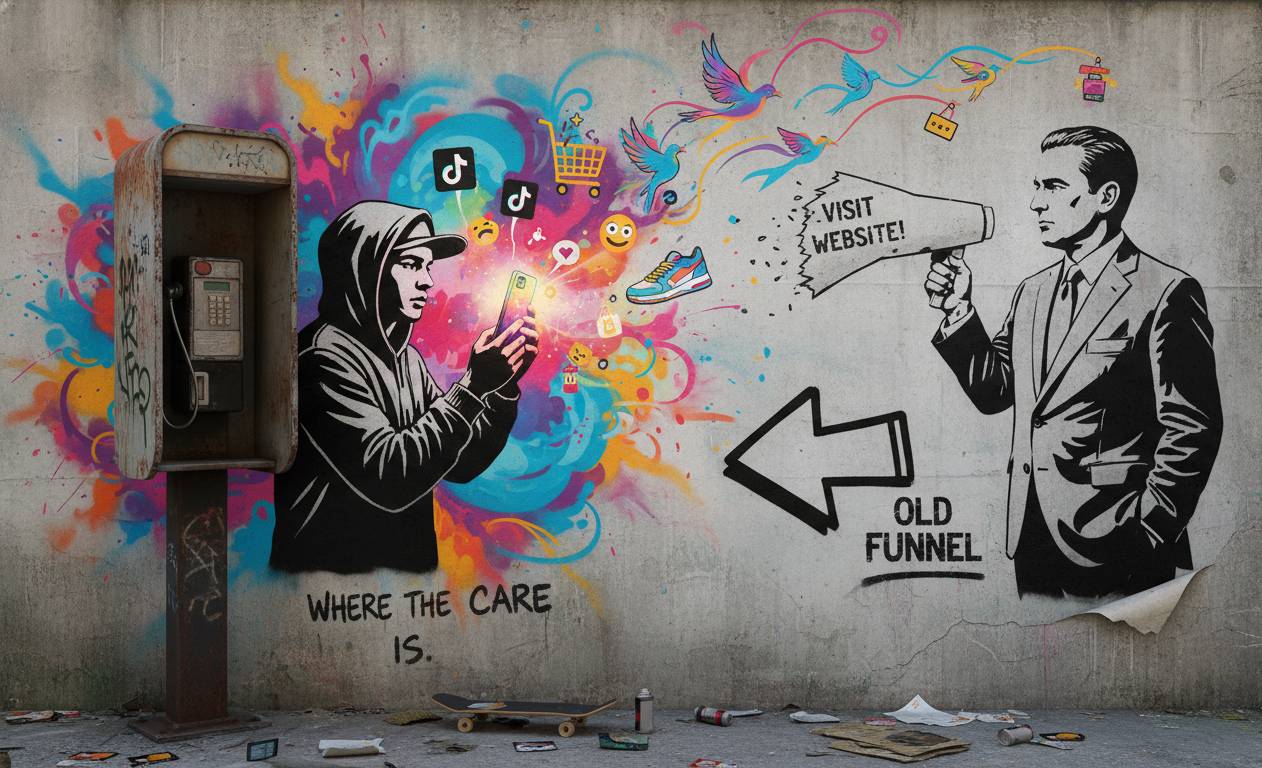
Let me start with something slightly uncomfortable. If your entire marketing strategy still revolves around “getting people to your website” you might be optimizing for a world that’s quietly disappearing. I’ve had conversations with brand teams who proudly say: “We drove 40% more traffic this quarter.” And my first thought - though I don’t always say it out loud - is: cool… but did anyone actually care?
Because here's the thing. Gen Z doesn’t wake up thinking: “Let me go browse some brand websites today.” That’s just not how they move through the internet. They’re somewhere else entirely.
It usually starts with… nothing
No intent. No plan. No shopping list. Just scrolling. That’s the part that took me a while to fully grasp. I used to think shopping always started with a need. You know - I need shoes, I need skincare, I need headphones. Logical. Efficient.
Gen Z? Not so much.
They start with whatever's in front of them. A video. A meme. A random “get ready with me” clip at 1:17 AM. And then - almost by accident - they discover something. Not because they were looking for it. Because it showed up at the right moment. And weirdly enough that moment is everything.
When content is the store
Here's where it gets interesting. Platforms like TikTok don’t feel like stores. They feel like entertainment. Like noise. Like a never-ending stream of “just one more video.” But spend enough time there and you’ll notice something. Products are everywhere. Not in a loud, banner-ad kind of way. More like… woven in. A creator casually using something. Someone explaining why they switched products. A trend where everyone seems to be wearing or using the same thing.
You don’t feel like you’re shopping. Until suddenly - you are.
I’ll be honest. I’ve caught myself doing this. Watching something completely unrelated thinking “that's actually kind of cool” and before I know it I’m three taps away from buying it.
No research. No comparison. Just a vibe.
And that’s exactly the point.
The dangerous power of “That looks good”
Traditional e-commerce is built on logic. Compare features. Read reviews. Make the “best” choice.
But what’s happening now? It’s way more emotional. It’s not “Is this the best product?” It’s “Do I like this right now?” Big difference.
And when you combine that with zero friction - no leaving the app, no complicated checkout - you get decisions that happen fast. Sometimes too fast.
But Gen Z is comfortable with that speed. They trust their instincts more than we expect. Or maybe they just don’t overthink it the way older generations do.

Roblox, avatars and why this isn’t just “kids stuff”
Okay, quick story.
I once watched someone spend real money on a digital jacket. Not ironic. Not as a joke. They genuinely cared about how their avatar looked. My first reaction? “Why would you pay for something that isn’t real?” But that question didn’t age well. Because for Gen Z, it is real.
Platforms like Roblox aren’t just games - they’re spaces. Social spaces. Identity spaces. Places where people hang out, express themselves, and yes, spend money. But they’re not “shopping” in the traditional sense. They’re building a version of themselves. And once you see it that way it clicks.
Of course they’ll pay for a digital item. It’s not about the item - it’s about what it represents.
Your website feels like homework
Let’s be brutally honest for a second. Most brand websites feel like work. You land on them and immediately there's pressure. Pick something. Compare options. Make a decision. Don’t mess it up. It’s structured. Intentional. A little… heavy.
Now compare that to how Gen Z spends time online.
They’re jumping between content, chats, videos, comments, trends - all within seconds. It’s fluid. Messy. Kind of chaotic. And in that context opening a website feels like switching modes. Like going from hanging out with friends to sitting down for an exam. That might sound dramatic, but behaviorally, it’s not far off.
Commerce is becoming invisible
Here's a weird way to think about it. Shopping used to be something you did. Now it’s something that just… happens. You don’t plan it. You don’t schedule it. You don’t even always recognize it. You’re just living your digital life and occasionally something catches your attention enough to act on it. Interestingly enough this makes buying feel lighter. Less like a commitment. More like a reaction. And that’s why impulse purchases aren’t just increasing - they’re becoming normal.
Trust doesn’t work the way it used to
Brands used to build trust through polish. Nice website. Clean design. Professional photos. Carefully written copy.
Gen Z doesn’t ignore that - but they don’t rely on it either. They trust people more than brands. Not in a blind way. In a “this feels real enough” way. A slightly messy video. A casual recommendation. Someone saying: “I didn’t expect this to be good but it is.”
That carries weight. And honestly? It makes sense. We've all seen too many perfect ads. At some point perfect starts to feel fake.
So… what are brands supposed to do?
This is where most advice falls apart because it usually sounds like:
Which is technically true - and completely unhelpful.
Let me put it differently. Stop thinking like a brand trying to sell something. Start thinking like a person trying to be interesting. That’s the shift. Because in these environments nobody owes you attention. You have to earn it. And you don’t earn it by being louder - you earn it by being relevant.

Content isn’t a strategy - it’s the entry ticket
If people don’t see you nothing else matters. Not your product. Not your pricing. Not your website. And today visibility doesn’t come from banners or search results alone. It comes from content that people actually choose to engage with. That doesn’t mean everything has to be funny or viral. But it does mean it has to feel like it belongs. Like it wasn't forced into the feed - it grew there.
You don’t control the story anymore
This part is tough. Brands are used to controlling everything. Messaging, visuals, tone - all carefully aligned. But once you step into these environments control slips a bit. Creators interpret your product in their own way. People react in unpredictable ways. Context changes constantly.
And honestly? That’s the whole point.
Because the moment everything feels too controlled it stops feeling real. So instead of trying to manage every detail the better move is to participate - and let things breathe a little.
The trade-off nobody likes to admit
Here's the reality. You can have control or you can have relevance. It’s very hard to have both at the same level. Your website gives you control. Every pixel, every word, every step.
But these platforms? They give you access. Attention. Culture. Momentum. And right now attention is the scarce resource. So most brands, whether they admit it or not, are starting to lean toward relevance.
Where this is all going
If you zoom out the pattern is pretty clear. Shopping is dissolving into everything else. Social platforms are becoming marketplaces. Games are becoming economies. Creators are becoming brands. And the line between digital and physical products is getting blurry. We’re moving toward a world where you don’t “go shopping.” You just exist online - and occasionally buy things along the way. That might sound abstract but, honestly, we’re already there.
One last thought
Gen Z isn’t doing anything wrong. They’re just doing things differently.
- They don’t separate shopping from entertainment.
- They don’t treat brands as the default source of truth.
- They don’t follow neat, predictable funnels.
And that can feel frustrating - especially if you’re trying to fit them into an old model. But maybe the model is the problem. Because at the end of the day it’s not about building a better website. It’s about showing up in the moments that actually matter. And more often than not those moments aren’t happening on your site.