Congratulations. You've Been Replaced by Yourself.
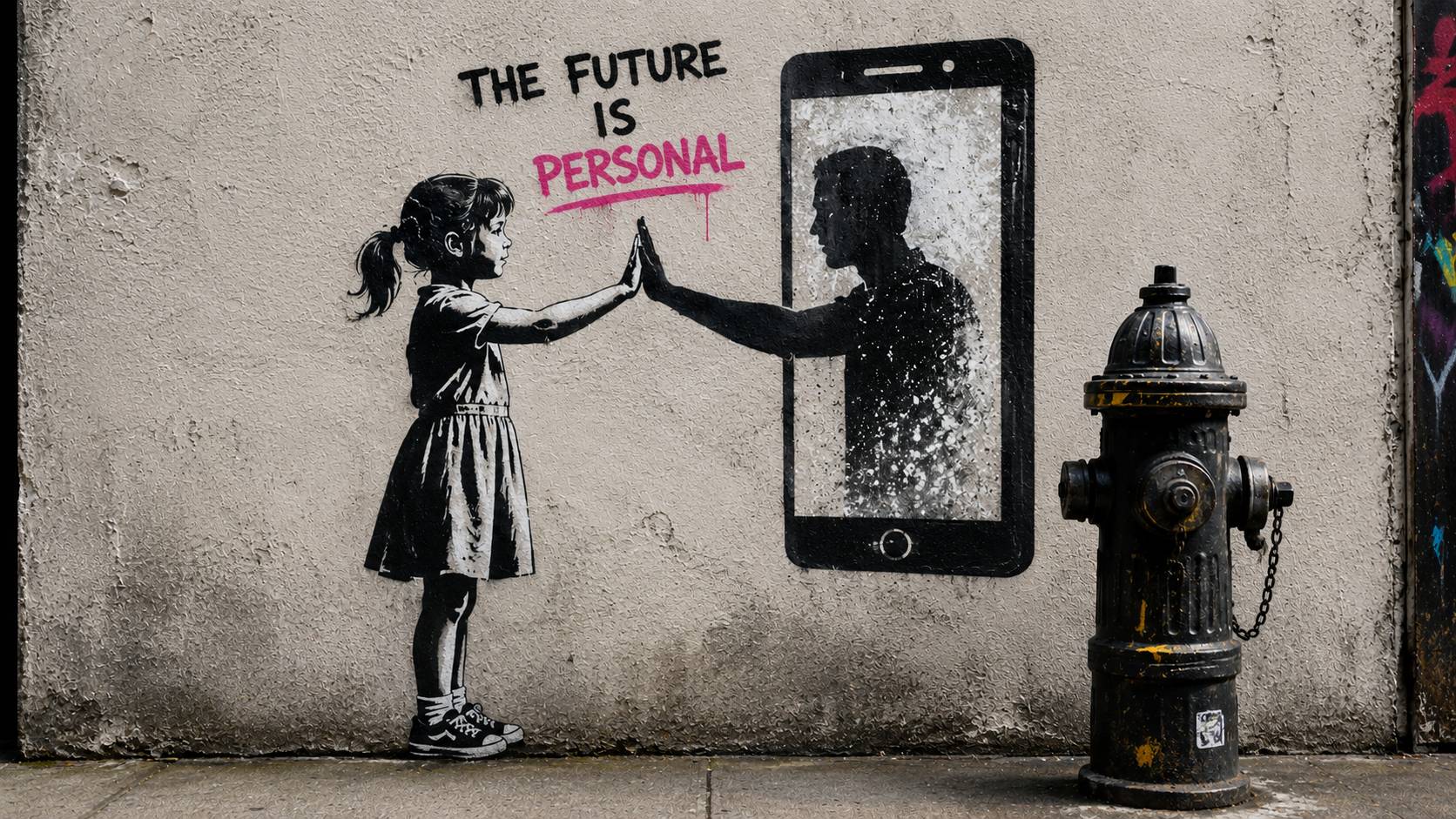
If you ask most retail executives whether they want “an AI version of every customer” the answer is almost always yes - right up until the next question arrives: what does that actually mean?
For years the industry has talked about Customer 360, personalization, one-to-one marketing, omnichannel data and next-best action. Those ideas were useful but they were also often fragmented. The loyalty team had one view of the customer. Ecommerce had another. The media team had a third. The call center had a fourth. And the physical store, in many cases, had almost none. The result was a retail experience that felt less like one intelligent brand and more like half a dozen disconnected systems trying to guess what the customer wanted next.
From customer records to living customer models
What is changing now is not merely that retailers have more data. It is that they are beginning to convert that data into a living model of customer behavior: a profile that updates with each interaction, predicts likely outcomes, supports decisions and increasingly can be queried through a conversational interface. That is why the phrase “customer digital twin” matters. It gives retail a better mental model than the older language of dashboards and segments. A customer twin is not just a database record. It is a system that remembers, infers, predicts and acts.
In the public imagination, a digital twin sounds like a science-fiction clone. In practice retail’s first generation of customer twins is more prosaic and more powerful. It is built from web clicks, app events, store purchases, search behavior, product reviews, loyalty histories, service interactions and contextual signals such as time, channel and inventory. Amazon now openly describes personalization as being shaped by purchase history, Alexa shopping conversations, reviews, lists and searches. Adobe talks about a single shopper view across online stores, physical locations and loyalty programs. Salesforce talks about a trusted Customer 360 profile. Google’s commerce stack adapts recommendations to individual shopping behavior, preferences and historical data. Put those pieces together and the twin starts to come into focus.

The easiest way to understand this shift is to break the customer twin into three layers.
The first is memory. This is the part that knows who the customer is or at least who the system believes the customer is. It connects identity across web, app, email, loyalty and store. It remembers past purchases, category preferences, redeemed offers, service complaints, browse trails and things the customer has explicitly said. Amazon’s “About You” is revealing because it makes that memory visible and editable. That matters. Once customers can see the memory the system becomes more legible - and more trustworthy.
The second layer is prediction. This is where the twin stops being a record and starts becoming a model. It estimates what the customer is likely to do next: churn, buy, ignore, convert, return, respond to a message or need help. Adobe’s Customer AI is a clean example. It produces individual-level churn and conversion propensity scores and highlights influential factors. Academic research is moving in the same direction. Studies are now showing that multichannel retail data can even predict psychological traits such as price consciousness or need for touch which means the twin can increasingly model not just actions but motivations.
The third layer is decisioning. This is where the customer twin actually changes business outcomes. It decides which products to rank, which offer to send, which content to surface, whether to intervene to prevent churn, which message to suppress and which service action is worth taking. This is the layer that creates revenue but it is also the layer where many retailers go wrong. If the engine simply predicts who is likely to buy then discounts get wasted on customers who were going to convert anyway. That is why the next frontier is not just predictive AI. It is causal AI: models that estimate the incremental effect of an intervention. The difference between “will buy” and “will buy because we intervened” is the difference between expensive personalization theater and real economic advantage.
This is not theoretical. Look at what public case studies already show. Pomelo Fashion used Amazon Personalize to rank products based on individual tastes and saw up to 15% gross revenue uplift from category pages, up to 18% higher click-through from category to product pages and up to 16% more add-to-cart clicks. Bazaarvoice using Google’s Recommendations AI reported a 60% CTR increase over its old rules-based recommendation system. Hanes Australasia reported a double-digit uplift in revenue per session. IKEA reported a 2% increase in ecommerce average order value. These are not tiny cosmetic wins. They are the kinds of improvements that compound across millions of sessions and justify meaningful investment.
Beyond personalization: The customer twin as an operating model
But recommendations are only the beginning. Once a retailer has a functioning customer twin new questions become possible.
What if the site could predict that this customer is not just browsing cookware but is shopping for a family camping trip three weeks from now? What if the retention system knew that this customer’s falling open rates are less important than the fact that they have started browsing private-label alternatives after years of buying premium brands? What if the call-center desktop knew that the shopper on the line is unlikely to churn because of a late package but highly likely to churn if the return experience goes poorly because they already had two service failures in the past 60 days? What if merchandising could test a promotion not only against last year’s response curves but against simulated customer behavior under current traffic, current inventory and current price expectations?
That is where the conversation gets really interesting. The future retail twin is not just about personalizing the front end. It is about linking the customer twin to the rest of the retail system.
Lowe’s offers a glimpse of that future. On one side it has Mylow, a customer-facing AI assistant that gives project-aware recommendations. On the other it has digital twins of more than 1,750 stores that can simulate layouts, merchandising choices and operations. When those worlds come together, retail stops treating customer experience and operations as separate domains. The system can begin to ask richer questions: Which assortment should this store carry for the customers it actually serves? Which project recommendations should be made when local weather patterns are shifting? Which aisle placements will improve both discovery and associate productivity for the kinds of customers who shop this store most often?
This is why “AI version of every customer” is such a provocative phrase. It sounds like a personalization story but it is really an operating-model story. The retailer that builds the best customer twin does not just send better emails. It organizes merchandising, media, service, loyalty and stores around a shared, updating model of customer behavior.
That said there is a danger in overselling the idea. The most useful recent warning comes from experts quoted in 2026 coverage of customer twins: these systems are not a silver bullet and one-twin-per-person can be an unwise use of budget if the data or use case is weak. That warning should be taken seriously. In retail there are at least three ways customer twins can fail.
The first failure mode is bad data made faster. If a retailer’s identity graph is weak, catalog attributes are messy and channel tags are inconsistent then “twinning” the customer just scales confusion. The system gets more personalized but not more correct. In some ways this is worse than impersonal retail because it feels both wrong and intrusive.
The second failure mode is correlation masquerading as intelligence. Many personalization systems are still optimized for click-through or conversion probability not incremental business impact. That is fine for some ranking decisions but dangerous for promotions, media spend and retention offers. If the customer twin does not know the difference between customers who are likely to buy anyway and customers who need intervention it will burn margin and congratulate itself for doing so. This is exactly why uplift modeling, constrained optimization and policy evaluation are becoming strategic rather than academic topics.
The third failure mode is trust collapse. The closer the twin gets to representing the customer’s preferences the bigger the privacy and fairness stakes become. Under GDPR customer twinning is frequently profiling. Under CCPA retailers must support deletion, correction, notice and opt-out rights. Regulators are also looking hard at surveillance pricing and hyper-personalized targeting. The ethical problem is broader than law though. A retailer can be legally compliant and still make customers feel watched, pinned down or unfairly treated. The winning standard is not “creepy but legal.” It is “useful, explainable and welcome.”

So where should a retailer start?
Not with a flashy AI companion. Not with individualized pricing. Not with a science-project simulation lab.
The right place to start is with the decisions that are frequent, measurable and already costly when they are made poorly. Recommendations. Basket completion. Churn alerts. Suppression of irrelevant promotions. Better use of loyalty moments. Customer service memory. These are areas where the twin can prove that it improves relevance without overreaching. Once that foundation exists the retailer can move into offer optimization, journey orchestration and scenario testing. Only after those systems are stable should it push toward more agentic or highly simulated forms of customer twinning.
The biggest misconception in retail AI is that the real breakthrough will come when a bot can talk like a human. That matters but it is not the core advantage. The core advantage is that the retailer develops a reliable, evolving model of customer behavior that is shared across the enterprise and tied to actual decisions. Conversation is just the interface. Memory, prediction and action are the substance.
So what happens when retailers have an AI version of every customer?
At first they stop showing obviously irrelevant products and offers. Then they stop over-discounting the wrong people. Then they start recognizing not just who the shopper was but what they are trying to do right now. Then stores, service and merchandising begin to adapt around the same intelligence. And eventually the retailer stops acting like a collection of channels and starts acting like a coherent system with memory. That is the real promise of the customer digital twin. Not a synthetic person. A smarter retailer.