The Sale That Ate Next Month
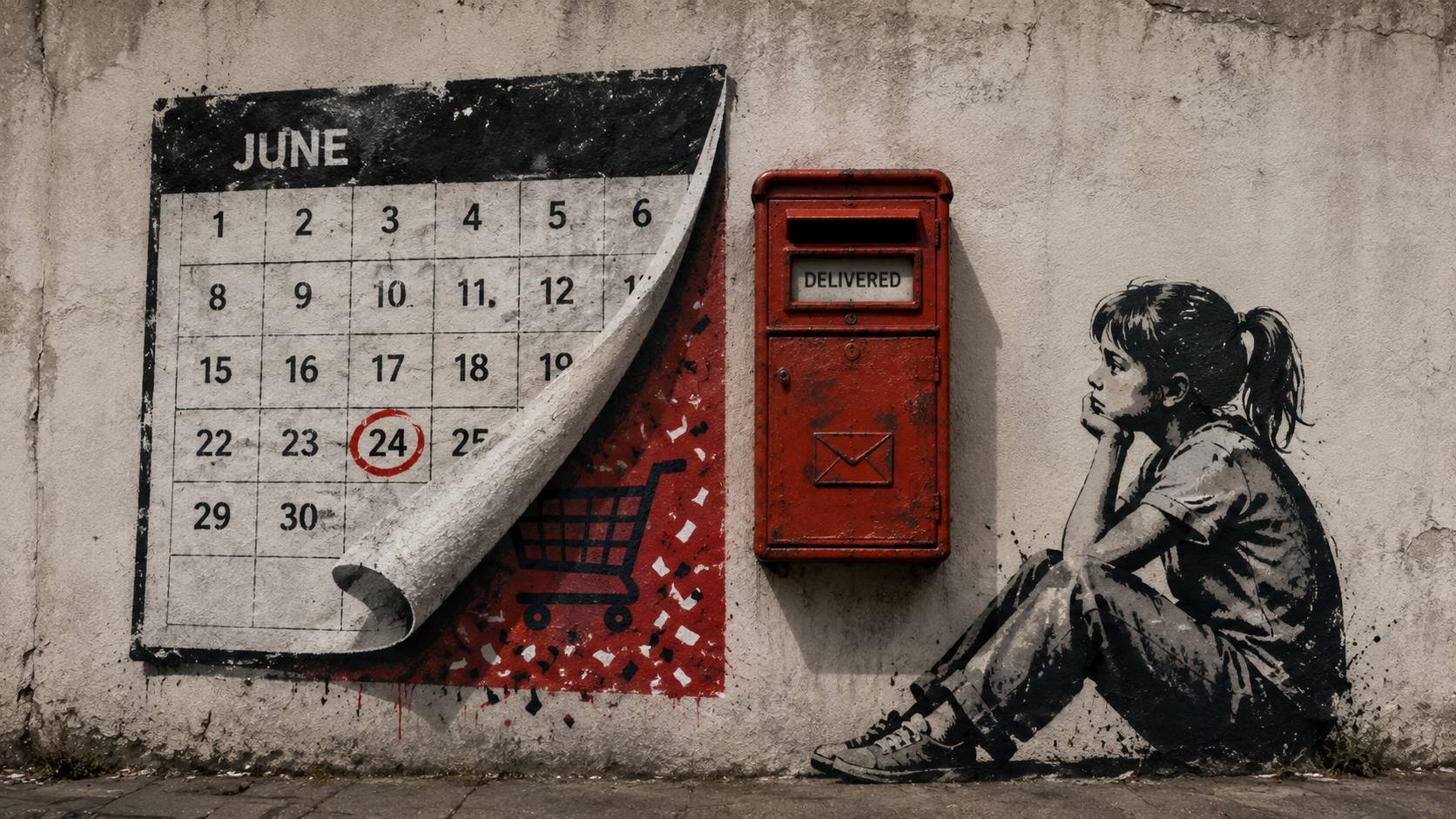
Every summer, retailers celebrate the same kind of headline: billions spent in a handful of days, record order counts, unprecedented traffic, and discounts that sent consumers racing to their carts.
Then the calendar turns.
That is when things get interesting.
In 2026, Amazon moved Prime Day earlier than usual, running the four-day event from June 23 through June 26 instead of July, where its flagship summer sale had spent most of its life. Walmart moved Walmart Deals into June 22–28. Target scheduled Circle Deal Days for the exact same June 23–26 window. In a matter of days, what used to look like an Amazon event became a nationwide retail promotion week.
The immediate results looked spectacular. Adobe says U.S. shoppers spent $26.4 billion online across retailers during those four days, 9.3% higher on its year-over-year comparison. Discounts reached roughly 24% on electronics and apparel, 20% on toys and the high teens in several home and appliance categories. Consumers even “traded up”: Adobe saw a larger share of purchases flowing toward the most expensive products, especially electronics.
Then came July.
On August 14, the Census Bureau reported that total U.S. retail and food-services sales had declined 0.6% from June to July. More strikingly, sales at nonstore retailers fell 2.2%.
And suddenly the record June numbers looked different.
A 2.2% decline—but be careful what that number means
First, let's clean up an easy misunderstanding.
You may see the July figure described as a “2.2% decline in online sales.” That is directionally understandable but technically imprecise. The Census Bureau's 2.2% number refers to nonstore retailers, an internet-heavy retail classification, not all U.S. retail and not a pure monthly e-commerce series. Total retail and food services declined only 0.6%. And neither number says the consumer collapsed: total sales were still 5.0% above July 2025, while nonstore sales were 7.7% higher year over year.
So this was not a retail recession appearing overnight.
It looks much more like a timing story.
Consider what happened in the handful of recent years for which the Prime Day calendar gives us a useful natural comparison.

These are seasonally adjusted Census readings as published in the respective July retail reports; they are not adjusted for inflation.
That table is hard to ignore.
The only two years in this recent sample when Prime Day took place in June are the only two years when July nonstore retail went backward. The four July-event years all produced positive July nonstore growth.
Do not turn that into a causal regression. There are only two June observations, and 2021 came with a warehouse full of pandemic-related confounders. But as circumstantial evidence goes, the pattern is unusually neat.
More importantly, we do not have to rely on macro statistics alone.
Shoppers are telling us they waited
Numerator asked 2026 Prime Day customers what they actually did. Nearly half said they bought something they had been waiting to purchase until it went on sale.
Read that sentence again from a retailer's perspective.
A customer sees a $400 appliance in May. She intends to purchase it sometime this summer. She knows Prime Day is coming, so she waits. The retailer records nothing in early June. On June 24, the appliance gets a 20% discount. She buys it.
The Prime Day dashboard records a conversion.
Revenue spikes.
The promotion team celebrates.
But did the retailer create a sale?
Maybe not. It may simply have taken a July purchase, moved it into June and attached a discount to it.
Adobe sees the same mechanism in behavioral form. Its analysts say consumers have become conditioned to wait for major promotional windows before buying products they already have their eyes on.
Circana's 2026 findings are even blunter. Early-summer promotions did produce a short-term increase: discretionary general-merchandise revenue increased 6% week over week and non-edible CPG increased 3%. But volume was relatively flat, promotional lifts were softer than in recent comparable periods, and Circana concluded that the events were largely shifting when purchases happened rather than generating genuinely incremental demand.
That is the Prime Day hangover in one sentence.
The shopping spike and the demand hole
Think of consumer demand as water moving through a pipe.
A mega-sale can widen the pipe temporarily. But it can also install a giant pump that sucks water forward from the next section.

For a laptop, the post-event logic is obvious. A shopper who buys one in June probably does not buy another in July.
For household essentials, it works through inventory. Buy three months of detergent, pet food or personal-care products at a deep discount and your next replenishment date moves into the future.
This phenomenon has been documented in marketing research for decades. Scott Neslin, Caroline Henderson and John Quelch described sales promotions as accelerating purchases either by getting people to buy earlier or by getting them to buy a larger quantity. Igal Hendel and Aviv Nevo later showed why inventory makes temporary discounts especially deceptive: if you ignore consumers' ability to stockpile and time purchases, you can substantially overestimate their long-run response to lower prices.
The vocabulary may be academic. The business implication is very simple:
The event lift is not the same thing as incremental demand.
Even Amazon's earnings show the calendar shift
There is another clue that deserves more attention than it has received.
Before Prime Day, Amazon's first-quarter financial guidance specifically told investors that its second-quarter forecast assumed Prime Day would happen during Q2. After the June event, Amazon gave Q3 guidance and said something remarkable: if analysts normalized for Prime Day's different timing between 2025 and 2026, Q3 year-over-year sales growth would be nearly four percentage points higher.
That is an enormous calendar effect.
It does not mean Amazon lost four percentage points of annual growth. Prime Day happened; Amazon booked the sales in Q2. But it proves that moving a mega-event by a few weeks can create the appearance of acceleration in one reporting period and deceleration in another.
Now zoom out from Amazon.
Walmart moved its summer event into virtually the same June week. Target matched Amazon's dates exactly. That means the pull-forward was not confined to Amazon's own sales. The entire competitive marketplace concentrated promotions into late June.
This is why the July Census result matters.
It is not simply “Amazon did well in June and Amazon did badly in July.” It potentially reflects an industrywide redistribution of the summer shopping calendar.
The problem gets bigger when retailers train customers to wait
There is a second-order effect that may matter more over time.
Consumers learn.
Prime Day started in 2015 as a novel celebration of Amazon's twentieth birthday. A decade later, shoppers know the rhythm. They expect large sales. Competitors tell them their own big sales will happen simultaneously. Shopping apps provide price histories and deal alerts. Amazon itself lets customers set target prices and receive notifications when merchandise becomes cheaper.
That improves transparency for consumers.
But for retailers, it creates a nasty possibility: the sale does not merely borrow demand from afterward; anticipation can suppress demand beforehand as well.
Why buy the vacuum cleaner on June 10 when you expect it to be 25% cheaper two weeks later?
Why furnish a dorm room in early June when Amazon, Walmart and Target are all loudly advertising late-June back-to-school deals?
Why buy a new television at full price in the first half of the month?
The stronger and more predictable the promotion becomes, the more rational waiting becomes.
The retailer then sees an underwhelming pre-event period, an enormous four-day spike and a soft post-event period. If management evaluates only the spike, the promotion looks fantastic.
Over the full quarter, it may be far less impressive.
But Prime Day is not “fake growth”
It would be equally misleading to conclude that every Prime Day dollar is cannibalized.
Mega-sales create several forms of genuine value.
NIQ estimates Amazon captured 68% of online spending during Prime Day compared with 51% year to date. A sale that would otherwise have gone to another retailer is incremental to Amazon even when it is not incremental to retail as a whole.
Adobe found consumers trading up into higher-priced merchandise during the sale. That can increase basket economics even if the date of purchase moved forward.
Promotions also bring customers into new categories, introduce them to brands, clear excess inventory, improve inventory turns and acquire new shoppers who might generate profitable repeat purchases.
The key is separating those outcomes from the less valuable ones.
Imagine a retailer reports $100 million in promotional revenue.
Suppose $35 million came from genuinely additional purchases, competitive wins and profitable trade-up.
Another $40 million came from customers who simply moved July purchases into June.
Another $20 million came from loyal customers who were going to buy the same product during June anyway but happily accepted the discount.
The remaining $5 million came from stockpiling that will suppress demand through August.
The event dashboard says $100 million.
The economics are radically different.
Retailers need a new Prime Day scorecard
The most important change retailers can make is painfully simple: stop measuring the event as an event.
Measure it as a demand window.

That last question is the uncomfortable one.
Retailers have become extremely good at measuring what happened after an ad impression or during a promotion. They are often much worse at measuring what would have happened anyway.
Prime Day makes that distinction impossible to ignore.
Not every product deserves the same discount
A smarter discount strategy begins with cannibalization risk.
A deep markdown on slow-moving inventory may be completely rational. The retailer converts excess stock into cash and frees warehouse capacity.
A discount on a new brand may be worthwhile because it purchases trial.
A deal on a television might attract a customer who otherwise would have bought from a competitor—and could induce the shopper to trade up.
But a huge discount on an everyday product with extremely predictable repeat demand deserves more scrutiny. If an established customer normally spends $50 every month and the sale simply persuades her to buy three months' supply for $120, the retailer has not magically generated $120 of demand. It has collected future revenue early, discounted it, and delayed the next shopping trip.
That can still have strategic value. Cash flow, share defense and retention all matter.
But management needs to know what it bought.
The next frontier is incrementality, not bigger discounts
Mega-sales are not going away. In fact, the 2026 calendar suggests they are becoming more powerful.
Prime Day is no longer merely Amazon's event. Walmart and Target arrange their promotional schedules around the same consumer moment. Back-to-school shopping is being invited into June. Consumers compare prices across multiple retailers in real time. Nearly half of Numerator's Prime Day shoppers said they were waiting for a sale, while more than half compared prices across retailers.
That gives retailers an opportunity—but also a warning.
The winners will not necessarily be the companies offering the deepest discount on the most products.
They will be the companies that can distinguish a sale they created from a sale they borrowed, and a customer they won from a customer they merely subsidized.
For many retailers, that means using holdout groups, tracking cohorts long after the promotion ends, forecasting individual replenishment cycles, measuring pre-event waiting, separating new-to-brand buyers from loyal customers, and evaluating gross profit rather than gross merchandise value.
It may also mean resisting the reflex to discount everything simply because Amazon does.
An exclusive bundle can win attention without resetting a product's reference price. Loyalty points can preserve future value better than an across-the-board markdown. A free service or warranty can differentiate a retailer without giving margin away to customers who already intended to purchase. Personalized promotions can target the shoppers whose behavior can actually be changed.
Most importantly, promotional teams should be rewarded for incremental annual profit, not the height of a four-day revenue spike.
The July 2026 data are still preliminary and will be revised. The Census category is nonstore retail, not a perfect monthly e-commerce measure. We have only two recent June Prime Day observations, and one of them occurred during the highly unusual economy of 2021. So nobody should claim that Amazon moving Prime Day into June “caused” precisely 2.2% of July sales to disappear.
But taken together, the evidence is remarkably consistent.
Census shows the July reversal. Amazon's earnings guidance shows a huge quarter-to-quarter calendar effect. Circana says early-summer promotions largely shifted purchasing timing. Adobe says consumers have learned to wait for big promotional moments. Numerator finds nearly half of Prime Day buyers explicitly acknowledging that they waited for a sale. And decades of academic research say temporary discounts naturally generate purchase acceleration and stockpiling.
So, are mega-sales stealing tomorrow's sales instead of creating new ones?
Some of them, almost certainly.
The hard—and strategically important—question is no longer whether cannibalization exists.
It is how much of the record sales banner hanging over Prime Day represents genuinely new demand, and how much is tomorrow's shopping wearing today's discount tag.