The Bill Finally Arrived
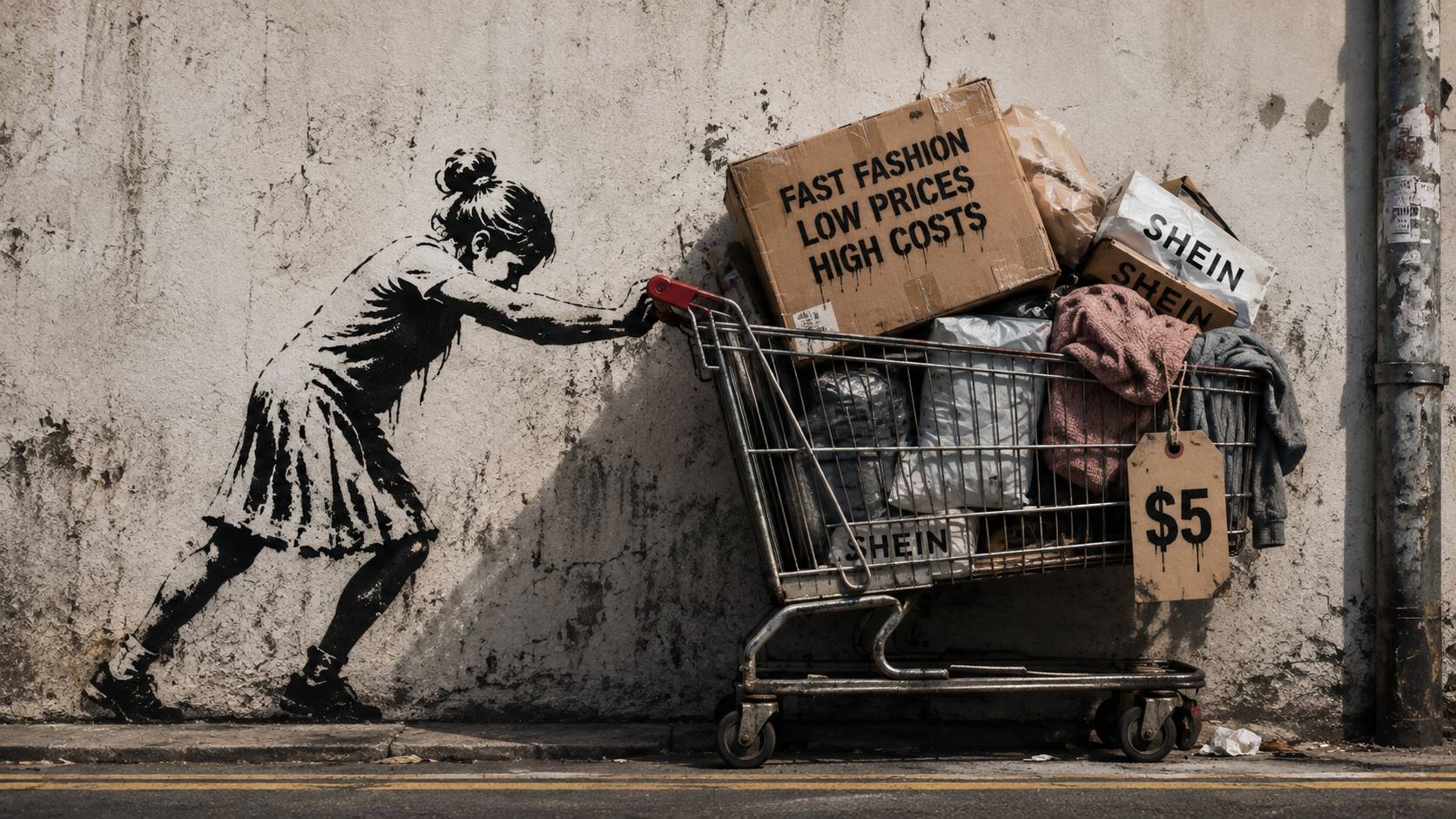
For years online shopping felt almost magical. Need a new hoodie? Six dollars. A summer dress? Eight. A phone case, kitchen gadgets, trainers, even furniture - all shipped halfway across the world for less than what many local stores charged for delivery alone. Consumers didn't spend much time asking how it was possible. They simply enjoyed the bargains.
Companies like Shein turned that expectation into a business empire. Their promise wasn't just affordable fashion - it was endless choice, constant novelty and prices so low they often made traditional retailers look overpriced overnight. Every day brought thousands of new products, endless TikTok hauls and social feeds filled with shoppers proudly showing off bags full of clothes that cost less than dinner.
For a while, it looked like the future of retail had arrived. Now that future is beginning to crack.
Shein's first quarterly loss isn't just bad news for one company. It's the clearest signal yet that the economics behind ultra-cheap e-commerce are changing. The model that fueled years of explosive growth is suddenly facing costs it was never designed to absorb, and the consequences stretch far beyond one fashion retailer.
The era of unbelievably cheap global shopping isn't ending because consumers stopped buying. It's ending because governments finally changed the rules.
The loophole almost nobody noticed
Most shoppers assumed companies like Shein became successful because they had incredibly efficient factories or somehow discovered a revolutionary way to manufacture clothing. Efficiency certainly helped but it wasn't the whole story. Behind every $7 dress was a trade policy that most consumers had never heard of: the U.S. de minimis exemption.
For years goods worth less than $800 could enter the United States without the complicated customs procedures and import duties that larger commercial shipments faced. Originally, the rule existed to simplify processing for low-value imports. In the age of global e-commerce, however, it evolved into something much bigger. Instead of shipping containers full of inventory into American warehouses and paying import costs upfront companies could send millions of individual packages directly to customers. Every parcel was treated as its own shipment. That changed everything.
Suddenly, businesses didn't need expensive warehouse networks, large inventories or traditional retail infrastructure. Products could move straight from Chinese factories to someone's front door with surprisingly little friction. It wasn't just cheaper. It fundamentally rewrote the economics of international retail.
As the model proved successful volumes exploded. Millions of parcels became hundreds of millions. Eventually, more than a billion low-value packages were entering the United States each year. What had once been a small administrative convenience became one of the busiest trade channels in the world.
Success built on speed
Shein understood something that many established retailers didn't. Fashion trends no longer lasted seasons. Sometimes they barely lasted weeks.
Traditional brands spent months designing collections, forecasting demand, manufacturing inventory and distributing products to stores. If they guessed wrong warehouses filled with unsold clothing that eventually ended up on clearance racks.
Shein flipped that process upside down. Instead of betting on trends it tested them. A new design would appear online in limited quantities. If customers loved it production increased almost immediately. If it failed, it quietly disappeared before anyone noticed. Social media became the company's research department. Every viral outfit became market data. Every influencer haul generated another wave of demand. Rather than dictating fashion trends Shein simply reacted to them faster than almost anyone else.
That speed created an illusion that many competitors struggled to match. Consumers didn't care where the products came from. They cared that the latest trend appeared online before anyone else - and at a fraction of the price.
But low prices hide fragile businesses
People often assume that companies generating billions in revenue are swimming in profit. Retail rarely works that way. Selling cheap products means every dollar matters.
Imagine selling a T-shirt for eight dollars. Before making any profit a retailer has already paid for raw materials, manufacturing, packaging, shipping, payment processing, customer support, marketing, software infrastructure and returns. There isn't much left. Businesses like Shein relied on selling enormous quantities of products while keeping every individual transaction profitable by only a few dollars. That works beautifully until costs begin rising. And once they do the math changes very quickly. A new tariff here. A customs processing fee there. Slightly more expensive air freight. Longer inspection times. None of those changes sound catastrophic individually. Together, they're enough to erase already thin margins. That's exactly what's happening today.
The warning signs are already here
When Shein reported its first quarterly loss many observers treated it as an isolated business story. It isn't. It's evidence that an entire retail model is under pressure.
The company acknowledged that recent U.S. trade policy changes significantly affected its financial performance. Tariffs increased. Duty-free treatment disappeared for many shipments. Logistics became more expensive. Prices started creeping upward. None of these developments are unique to Shein. Any retailer built around direct international shipping faces the same challenge. The difference is that Shein became the symbol of the ultra-cheap shopping era making its struggles impossible to ignore.

Why traditional retailers suddenly look smarter
For years legacy fashion companies looked slow. Zara had stores. H&M carried inventory. Department stores maintained expensive supply chains. Compared with digital-first companies that seemed outdated. Ironically, those same characteristics now provide stability.
Traditional retailers already import goods in bulk, pay duties before products reach shelves and maintain domestic distribution networks. Their costs are predictable. Their logistics are established. Most importantly, they were never dependent on a regulatory loophole.
That doesn't mean they're immune to global trade tensions. Far from it. But they don't have to redesign their entire business model because customs rules changed. Companies built entirely around direct international parcel shipping don't have that luxury. They're being forced to rethink everything - from pricing strategies to warehouse locations - almost overnight.
Consumers will feel the shift, even if they don't realize why
Most shoppers won't wake up one morning to find their favorite shopping app suddenly gone. That's not how these changes work. Instead, the experience will gradually become different. A dress that used to cost $8 now costs $11. Shipping takes another few days. Some products quietly disappear. Free delivery thresholds increase. Discount codes become less generous. None of these changes seem dramatic on their own.
Collectively, however, they mark the end of an era in which global logistics appeared almost free. The truth is they never were. Someone always paid. For years trade policy absorbed part of that cost. Now retailers - and eventually consumers - are picking up the bill instead.
The bigger winners won't necessarily be the cheapest
Whenever a major industry changes someone loses - but someone else usually comes out ahead. The obvious losers are companies whose entire business depends on shipping millions of low-cost parcels directly from Asia to Western consumers. Their competitive advantage wasn't just manufacturing efficiency. It was the ability to avoid costs that traditional retailers had accepted as part of doing business for decades.
Now those costs are coming back.
That doesn't mean companies like Shein will disappear. They're simply too large, too recognizable and too experienced to vanish overnight. But they'll have to become different businesses. Instead of relying on direct shipments from Chinese factories they're investing heavily in regional warehouses. They're experimenting with local suppliers. They're building fulfillment centers closer to major markets and trying to shorten delivery times while reducing customs headaches. Ironically, they're becoming more like the traditional retailers they spent years disrupting.
Meanwhile brands like Zara and H&M suddenly find themselves in a stronger position than many analysts expected. For years they were criticized for operating expensive store networks and carrying inventory across dozens of countries. Physical retail looked like an unnecessary burden in an increasingly digital world. Today those same stores double as fulfillment centers. Their warehouse networks are already in place. Their import duties are already factored into pricing. Their supply chains weren't built around a single regulatory advantage. That doesn't make them immune to rising costs but it does make them far more resilient.
Amazon may benefit even more.
Unlike fashion-only platforms Amazon isn't dependent on one sourcing model. Millions of products are already stored inside domestic fulfillment centers long before customers click "Buy Now". Third-party sellers can adjust prices more easily and Amazon's logistics network remains one of the most sophisticated in the world.
In other words, the companies that spent years building infrastructure may finally be rewarded for it.
Europe isn't standing still either
Many retailers hoped the United States would be the exception. Instead, similar conversations are happening elsewhere. European policymakers have also begun tightening rules around low-value imports reflecting many of the same concerns that drove changes in the United States: lost tax revenue, unfair competition for domestic businesses and an overwhelming number of small parcels flowing through customs.
For retailers, that's a worrying trend. Losing one major market is painful. Losing multiple markets at the same time forces a complete rethink of global operations. That's why many logistics companies are already advising clients to diversify manufacturing locations, move inventory closer to customers and prepare for a future where customs compliance becomes far more important than it was five years ago. The age of effortless international shipping is fading. The next phase of global commerce will almost certainly involve more paperwork, more regional distribution and higher operating costs.

Cheap fashion always had a hidden price
The conversation usually focuses on tariffs and logistics but there was always another side to ultra-fast fashion. Every impossibly cheap garment raised uncomfortable questions. How can a dress cost less than lunch? How can it travel thousands of miles, pass through multiple logistics networks and still sell for less than ten dollars?
The answer was never simple. Low prices were made possible by extraordinary manufacturing efficiency but also by relentless pressure on suppliers, incredibly fast production cycles, inexpensive international shipping and consumer demand for constant novelty.
Environmental groups have criticized this model for years. When clothing becomes almost disposable, people naturally buy more than they need. Wardrobes fill with garments worn once or twice before being forgotten. Millions of perfectly usable items eventually end up in landfills or are exported as textile waste to developing countries.
The environmental cost extends beyond waste itself. Producing synthetic fabrics requires energy and raw materials. Manufacturing consumes water. Air freight generates emissions. Packaging creates additional waste. One inexpensive purchase may seem insignificant. Multiply that by hundreds of millions of orders every year and the environmental footprint becomes impossible to ignore.
Consumers may end up making better decisions
Nobody likes paying more. But higher prices sometimes change behavior in unexpected ways. If a T-shirt costs four dollars buying five of them feels almost effortless. If it costs fifteen most people stop and think.
That pause matters. Retail analysts have long argued that consumers often confuse low prices with good value. They're not the same thing. A slightly more expensive garment that lasts three years is usually a better purchase than three ultra-cheap alternatives that lose their shape after a few washes. As prices normalize shopping habits may slowly shift away from impulse buying and toward more considered purchases.
That's unlikely to eliminate fast fashion altogether. People will always want affordable clothing. But affordability doesn't necessarily require disposability.
The next battle won't be about price
The first generation of global e-commerce competed almost entirely on cost. Who could sell the cheapest product? Who could manufacture the fastest? Who could deliver for the lowest price? The next generation will probably look very different. Retailers will compete on resilience instead of loopholes. On technology instead of subsidies. On inventory planning instead of endless discounts. Artificial intelligence is already helping companies forecast demand more accurately, reducing waste while ensuring popular products remain available.
Automation is making warehouses faster. Supply chains are becoming more diversified as companies spread manufacturing across multiple countries rather than depending heavily on a single region. The winners won't necessarily be those with the cheapest products. They'll be the businesses capable of adapting fastest to a world where trade policy changes can reshape an entire industry almost overnight.
A turning point for global retail
Looking back the golden age of ultra-cheap e-commerce was probably always temporary. It relied on a unique combination of low manufacturing costs, inexpensive global shipping, favorable trade rules and consumers who prioritized price above almost everything else.
Those conditions no longer exist in quite the same way. Shipping is more expensive. Governments are paying closer attention to international parcel flows. Trade policy has become increasingly unpredictable. Consumers themselves are starting to ask tougher questions about sustainability, product quality and ethical sourcing. None of this means online shopping is entering a period of decline.
Quite the opposite.
E-commerce will continue growing for years. What's changing is the business model behind it. Companies can no longer assume that shipping millions of tiny parcels across the world will always be the cheapest or simplest solution. Instead, they'll need stronger supply chains, better forecasting, smarter logistics and greater flexibility than ever before. That transition won't happen overnight and it certainly won't be painless. Some retailers will adapt. Others won't.
Conclusion
Shein's recent struggles shouldn't be viewed as the downfall of a single company. They represent something much larger: the end of an era in global commerce. For more than a decade ultra-low-cost e-commerce thrived because it combined technological innovation with a regulatory environment that made direct international shipping remarkably efficient. Consumers enjoyed unprecedented choice and remarkably low prices while companies expanded at a pace few thought possible.
But markets evolve. Governments rewrite the rules. Competitive advantages disappear. The companies that survive are rarely those that cling to yesterday's formula - they're the ones willing to reinvent themselves before circumstances force them to.
That's the challenge facing Shein today. And it's a challenge that extends far beyond fast fashion. The next chapter of global e-commerce won't be defined by who can sell a $5 dress. It will be defined by who can build the smartest, most resilient and most adaptable supply chain in a world where every shipment, every tariff, and every customer expectation is changing.
The era of unbelievably cheap online shopping isn't ending because consumers stopped wanting bargains. It's ending because the invisible system that made those bargains possible is finally being rebuilt.