Limited Time Offer: Honesty
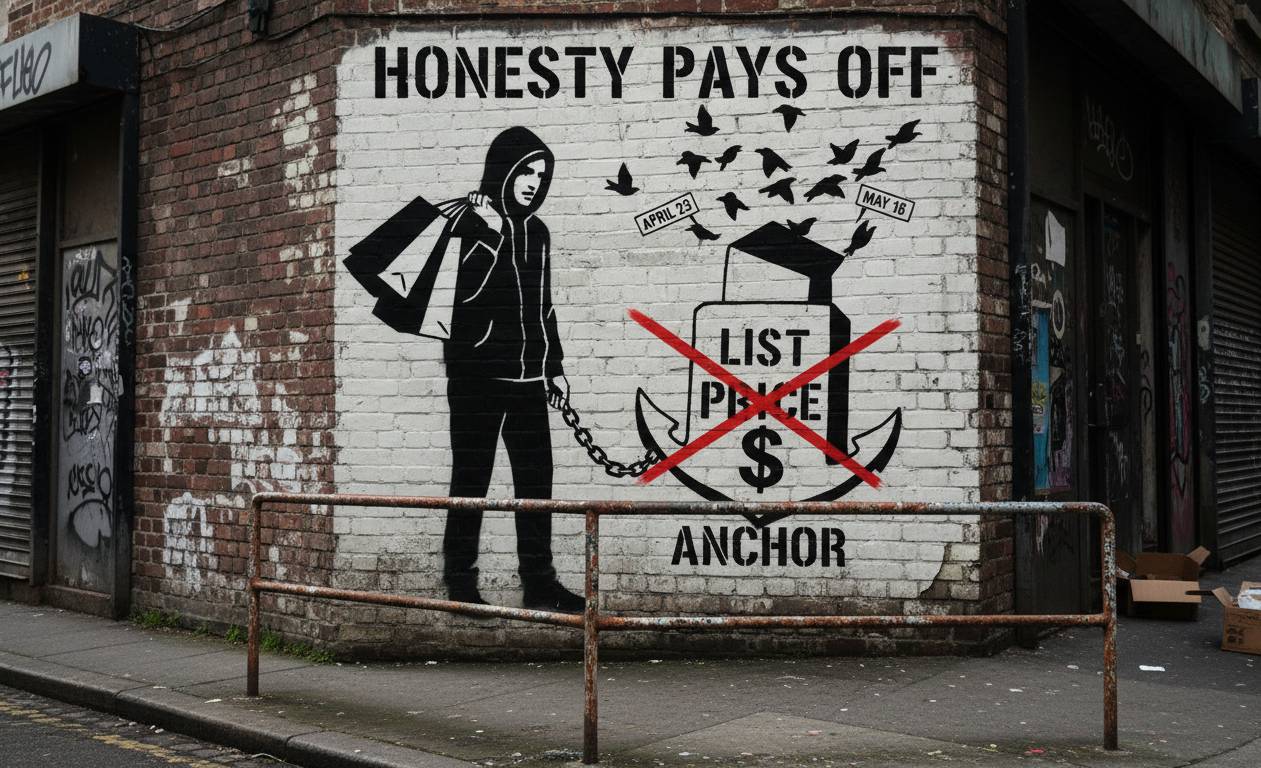
Amazon is tightening strike-through pricing and “Was/Now” discount baselines starting April 23 and May 18 2026 making fake discount anchors much harder to use. Here’s what changed, why it matters for conversion and brand equity and how to create perceived value on Amazon without relying on inflated list prices.
The real change: Amazon is turning “list price” into a claim you must earn
Amazon has announced “Upcoming Improvements to Reference Pricing” with two compliance deadlines that will change how discounts appear across search results and product detail pages. The short version: if your strike-through price isn’t supported by reality - either real market pricing or real Amazon purchase history - you’re likely to lose it.
This matters because strike-through pricing isn’t cosmetic. Amazon’s own seller-facing material explains that reference prices set a baseline that highlights savings and that seeing savings can influence purchasing behavior through the anchoring effect. When the anchor disappears the “deal” feels weaker even if your net price didn’t change.
What Amazon actually updated (with dates and what gets enforced)
Amazon’s announcement spells out two concrete policy updates.
April 23 2026: List Price validation tightens. The List Price you provide must meet one of two criteria to be validated: the product has been offered at that List Price at another retailer recently, or customers have purchased it as the Featured Offer on Amazon at that List Price. In other words you can’t “type in” a high MSRP and expect it to stick unless Amazon can corroborate it.
May 18 2026: Typical Price becomes harder to game. Typical Price is the median non‑promotional price paid over the last 90 days. Starting May 18 if more than half of the days in the 90‑day price history are below that non‑promotional median price Amazon will calculate Typical Price using all sales including promotional sales. Discounts not advertised as promotions can be treated as non‑promotional and included - meaning “quiet discounting” can still drag down your baseline.
Amazon also states these changes align strike‑through logic with the visible price history graph which shows the lowest Featured Offer price each day. That increases the strategic cost of price spikes and makes your recent pricing behavior harder to hide behind promotional mechanics.
Why this is happening: trust, lawsuits and regulation are colliding
Even if you ignore the public narrative Amazon is explicit about its internal rationale: “to maintain customer trust… and ensure discounts are clear and meaningful.”
Externally the timing aligns with rising scrutiny of discount claims. U.S. guidance on “former price” advertising says that if a former price is not bona fide - if it’s fictitious or inflated to enable a large “reduction” - the bargain is false. That is essentially the regulatory definition of fake discounts.
Recent Prime Day litigation narratives have echoed the same theme alleging that consumers were lured by percentage-off claims tied to “fictional” list prices and strike-through displays. Whatever the legal merits those narratives amplify the cost of leaving fake anchors untouched.
What changes in customer behavior when fake anchors disappear
Anchors work because people evaluate value comparatively. Anchoring and adjustment is a robust cognitive finding: the first number we see influences our judgment even when we know it shouldn’t. Remove the inflated anchor and the “gain” relative to the reference price shrinks or vanishes - so the offer feels less compelling.
This does not mean shoppers stop caring about price. It means price competes more directly with other signals. When the strike-through is gone buyers lean harder on:
credibility (reviews, brand familiarity, return confidence);
clarity of differentiation (why your product is better);
and the total offer (bundled utility, warranty, shipping speed).
There is an important nuance: fake discounts can increase sales even when the true price goes up. A Marketing Science study documents that synchronizing a price increase with the introduction of a list price can raise both margins and sales volume at consumers’ expense - precisely the kind of tactic Amazon is restricting. If your growth depended on that “value theater” your next quarter’s performance may depend on how fast you replace it.
What to do now: a practical playbook for brand managers and marketplace sellers
Audit every ASIN that currently shows a strike-through. Make a list of where you have (a) a List Price strike-through, (b) a Typical Price / Was Price strike-through and (c) deal badges. Then map each to the new “proof” requirements. If you cannot show either off‑Amazon recent offers at MSRP or Amazon Featured Offer purchases at MSRP plan for the List Price to disappear after April 23 unless you change your approach.
Stop treating MSRP as a marketing number; treat it as governance. Amazon’s own “Engage customers with an Amazon List Price” guidance says Amazon validates List Prices against store sales and external competitor prices and warns sellers not to inflate List Prices; it also notes Amazon may remove/edit List Prices if inaccurate and flags accounts for policy violations. That implies MSRP must be consistent with reality across major channels (DTC, retail partners, and Amazon).
Design promotions so they don’t destroy your 90‑day baseline. The May 18 rule signals that if discounted days dominate your last 90 days your Typical Price may reset downward by incorporating promotional sales. That makes perpetual discounting self-defeating: your future “% off” will be calculated off a lower baseline and the discount optics you relied on will fade.
Replace discount optics with value optics. Here are six alternatives (summarized in the comparison table below) that are compatible with Amazon’s direction of travel:
Earned MSRP (validated List Price),
bundles with real incremental utility,
tiered “good‑better‑best” design (including decoy logic),
social proof acceleration through CX and compliant review generation,
real scarcity (limited editions, batch drops),
and risk reversal (guarantee, warranty clarity).
Comparison table of alternative tactics
The table below focuses on tactics that can preserve (or replace) the conversion lift of strike-through pricing, while staying consistent with Amazon’s tightened reference-price logic and broader deceptive-pricing norms.
Be cautious with bundling and multi‑packs. Amazon’s fair pricing examples explicitly warn against “selling multiple units… for more per unit than that of a single unit of the same product.” If you bundle make the bundle clearly better (accessories, refills, added function) rather than a disguised price increase.
Treat compliance outcomes as part of your growth model. Seller forum experiences show that “Pricing Health” and policy enforcement can deactivate listings or suppress deal eligibility sometimes with limited recourse besides changing price. If your only growth lever is a fragile strike-through display you have platform risk. The goal is to build conversion resilience so policy changes don’t wipe out your unit economics.
A final perspective: this rewards real brands
Amazon’s crackdown punishes “manufactured savings” but it can reward brands that already have pricing discipline and differentiation. When fake anchors disappear authentic value moves up in the decision stack: better products, clearer messaging, stronger proof and consistent pricing architecture. That is healthier for long-term brand equity - even if it forces a painful short-term shift away from easy conversion hacks.